Brand or Performance? How to Divide Your Marketing Spend


Quick answer: You should be spending approximately 60% of your marketing budget on brand building (and I'll tell you why later).
But don’t worry, I know you're almost certainly not spending that much, and the good news is that neither are your competitors. The even better news is that your boss probably doesn’t want you to, and convincing them that you should is actually riskier than doing the right thing, so no pressure there either. So maybe the real question isn’t how much you’re spending, but how brand building and performance marketing can work together to actually move the needle.
In 2026, brand building really does matter now more than ever.
Sure, AI can spin up content and campaigns in seconds, but that just means everyone’s saying more of the same. The brands that actually cut through?
They sound human — real voices, real stories and the kind of trust you can’t fake with a prompt.
Let's take a step back
Before I get into what really separates brand and performance marketing, let’s be honest: most businesses can’t resist a short-term win.
We’d all love marketing to be simple. Run an ad, measure the ROI, compare it to another ad and go all in on the winner. Then rinse and repeat, test audiences, test creative, obsess over data and keep hustling (and hopefully growing).
It’s a very appealing and simple view of best-practice performance marketing. You get regular wins (hopefully) and there are plenty of activities and reports of impressive numbers to show off around the office.
At Rocket, we genuinely understand why a technically-focused digital marketer could make the mistake of confusing these sorts of tactical activities for a marketing strategy. Also, why a non-marketer in a position of power (i.e. a decision maker) could lean in to measurable and real-time results over the vaguer and more traditional approach of brand building. It all seems so modern and impressive, and there are plenty of thought leaders and digital marketing agencies pushing this view to the extreme. Unfortunately, it’s not how the world works.
Here's what I'd love to see
I want to rally marketers and non-marketing decision-makers to think big, to think long-term and most importantly, to think in a financially responsible way.
Because here’s the thing, going all-in on performance marketing isn’t healthy, and ignoring it in favour of brand building isn’t smart either. The real opportunity lies in understanding how brand building and performance marketing can work together to drive sustainable growth.
But before you roll your eyes, no, this isn’t another article about budget splits or how to write a digital marketing plan. It’s about something bigger: why strategy still matters, and why chasing quick wins won’t build the kind of brand that lasts.
What is the difference between brand and performance marketing?
When I talk about brand building (or long ads, if that’s your thing), I’m talking about the stuff that shapes how people feel about your business. It’s about creating a brand that’s recognisable, trusted and stands for something in your customers’ minds. The goal isn’t to drive a sale today; it’s to make sure people think of you tomorrow, next month and next year. Brand building tends to reach wide and lift your whole category, not just your own numbers.
On the other hand, performance marketing (yep, the short ads), is all about action. Clicks, leads, sign-ups, sales, the tangible stuff you can track, measure and optimise. It’s fast, data-driven and designed to show results now, not later.
Which wins: brand building vs performance marketing?
It’s all too obvious, but an effective marketing strategy almost always consists of both brand building AND performance marketing activities. Don’t you hate how so much of the world’s wisdom feels like a middle-of-the-road compromise?
Rely on performance marketing alone and you’ll be stuck on the hamster wheel, busy but not really moving forward. Sure, you’ll see results while you’re spending, but the moment you stop, so do they. Over time, doubling down on performance activity doesn’t build long-term growth or brand value. In fact, it usually flatlines or declines as competition increases and costs rise. You can’t ‘performance market’ your way to lasting success.
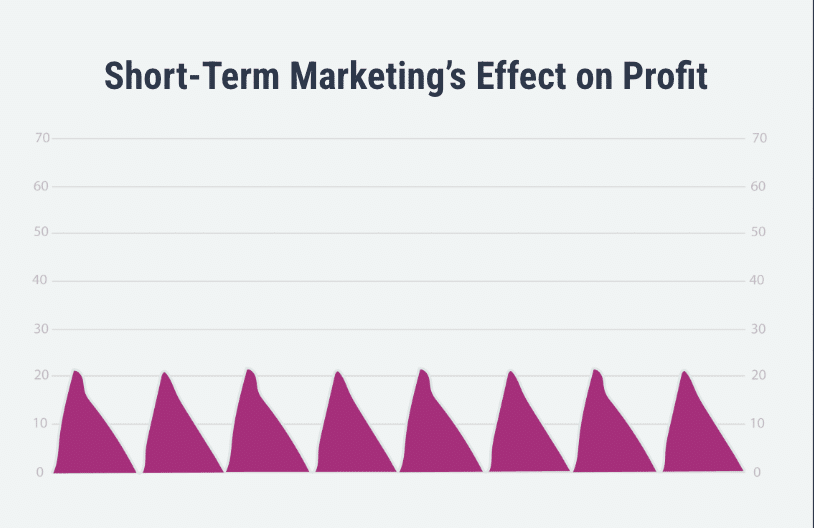
Performance marketing over time will deliver results when you’re spending, and nothing when you’re not.
Don’t get us wrong, performance marketing is excellent as it keeps you in the conversation with those ready to buy right now, but you have to accept you’ll be competing with a whole bunch of other advertisers and buyer options. Rely too much on it and you’ll be in the same position next week, next month and next year. Hence the hamster wheel. Performance marketing is heavily reactive; you’re waiting for someone else to do something. The reality is, only a small part of your market is ready to buy right now, and performance marketing usually zeroes in on them while missing the rest.
Meanwhile, brand building on its own, even though it’s great for creating differentiation and making your brand stand out, can miss the moment when people are actually ready to buy. When that happens, your competitors get the sale instead. And yeah, that stings.
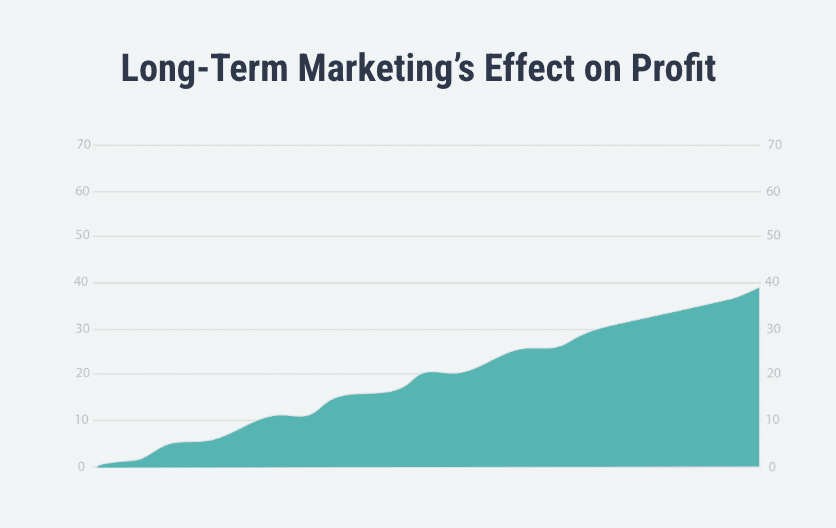
Brand building's contribution to profit builds slowly and creates residual value which continues after a specific campaign is stopped.
Brand building and performance marketing both matter. They do different jobs, but the magic happens when they work together.
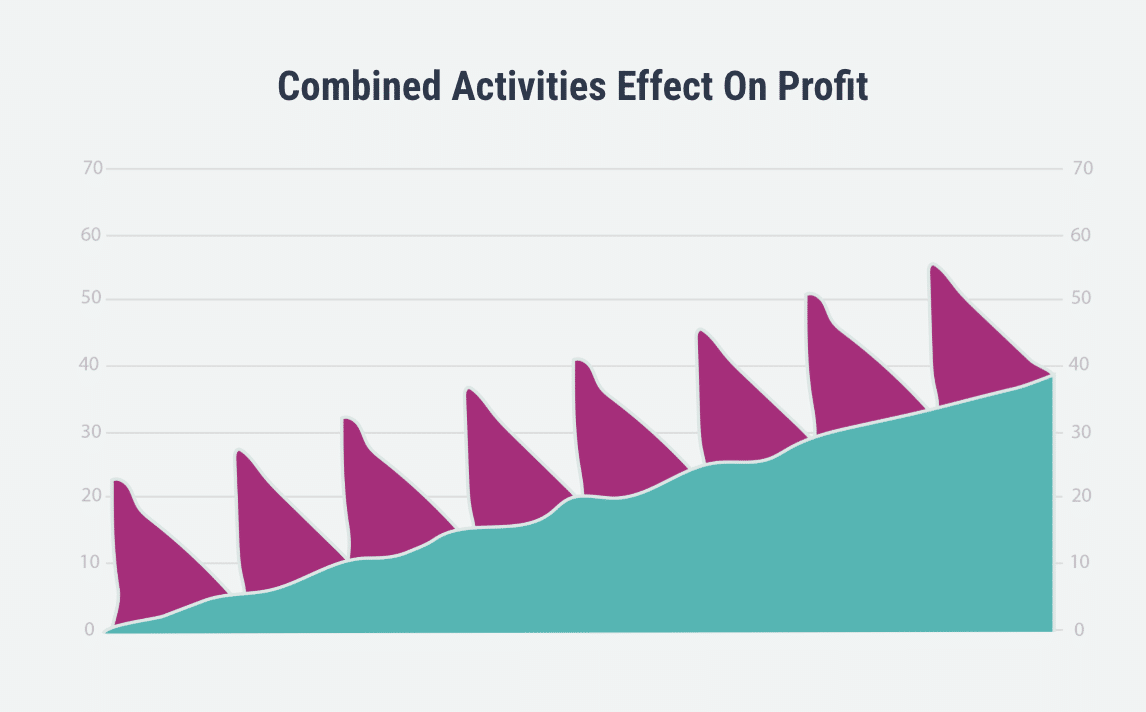
Brand building activities lift performance campaigns. The highest level of success comes when you mix both brand building and performance marketing activities.
Don't take our word for it
Les Binet and Peter Field suggest that, on average, around 60% of your budget should go toward brand building, with the remaining 40% allocated to your performance marketing budget. The exact split will vary by business, but the key is maintaining a consistent balance between long-term brand growth and short-term results.
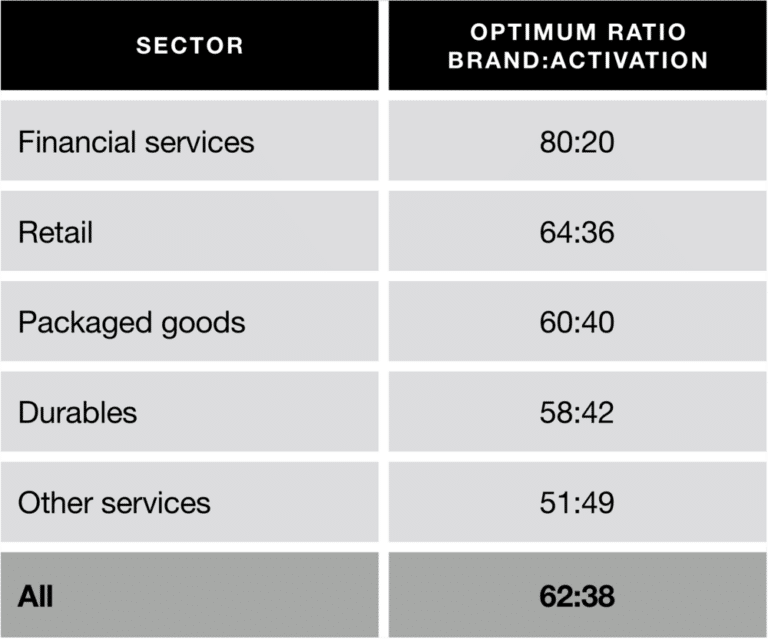
The ratio differs by sector as well as other factors including time. Credit: thinkingunstuck.com
Brand building has another potentially important advantage
Marketing legend Mark Ritson (and plenty of others) make a great point: long ads, the brand-building kind, can still drive short-term sales. But short ads, the performance ones, only work in the moment. They don’t do much for your brand over time.
That’s the sweet spot we’re all chasing: the kind of work that builds your brand and moves product. Just know it’s tricky to pull off. Get it wrong, and you’ll end up with an ad that fails on both fronts.
What's the right marketing budget ratio for your business?
If you’re wondering how to allocate budget for digital marketing, here’s the truth: the balance between brand and performance is everything. Go too hard on performance, and you’ll keep the sales coming but struggle to build anything lasting. Swing too far toward brand too quickly, and you’ll feel the pinch in short-term results.
You need to think about both the now and the next when you allocate your marketing budget. It’s about keeping the lights on today while building for tomorrow.
And remember, ‘best practice’ is rarely best for anyone. The only way to find your perfect mix of long and short-term activity is to test, learn and tweak as you go.
At Rocket, we like to think we’ve struck the right balance, not just in what we do for clients but in how we market ourselves, too. Whether it’s PPC, Social, SEO, Email or Creative, we blend brand and performance to get undeniable results.
Need help finding the right balance between brand building and performance marketing? Talk to Rocket’s specialists about how to allocate your marketing budget in a way that delivers results today and builds real growth for tomorrow. Call us on 1300 059 620 or leave us a message. We’d love to help you get the mix right.

Webinar: Digital Marketing in Australia
Join us for a live, moderated 60-minute webinar presented by James Lawrence on the latest changes to digital marketing. Understand attribution and data challenges, AI and how to balance brand and performance ads. Get 8 actionable steps to get digital right this year.
About the Author

David Lawrence is the MD and Co-Founder of Rocket, an award-winning Australian digital marketing agency. He is also the co-author of the Amazon #1 best-selling marketing book 'Smarter Marketer'. David has presented at several events including Inbound, Search Marketing Summit, Mumbrella360, CEO Institute and a variety of seminars and in-house sessions.
David has built his expertise from a diverse career, starting with an economics degree before jumping into all things web in the late 90s.
Today, David is Rocket's Managing Director and is known for his ability to find clarity in the bigger picture. He is highly respected as a digital marketing authority, sharing his expertise with an extensive network here in Australia and around the world.