Attribution Is Breaking: How Marketers Should Rethink Paid Media in 2026

Episode Description:
As platforms push Performance Max, Advantage+ and new modelling systems, we’re entering a world where results often look better in-platform than they do in reality. Behind the scenes, attribution is becoming harder and marketers are being forced to rethink how they interpret success altogether.
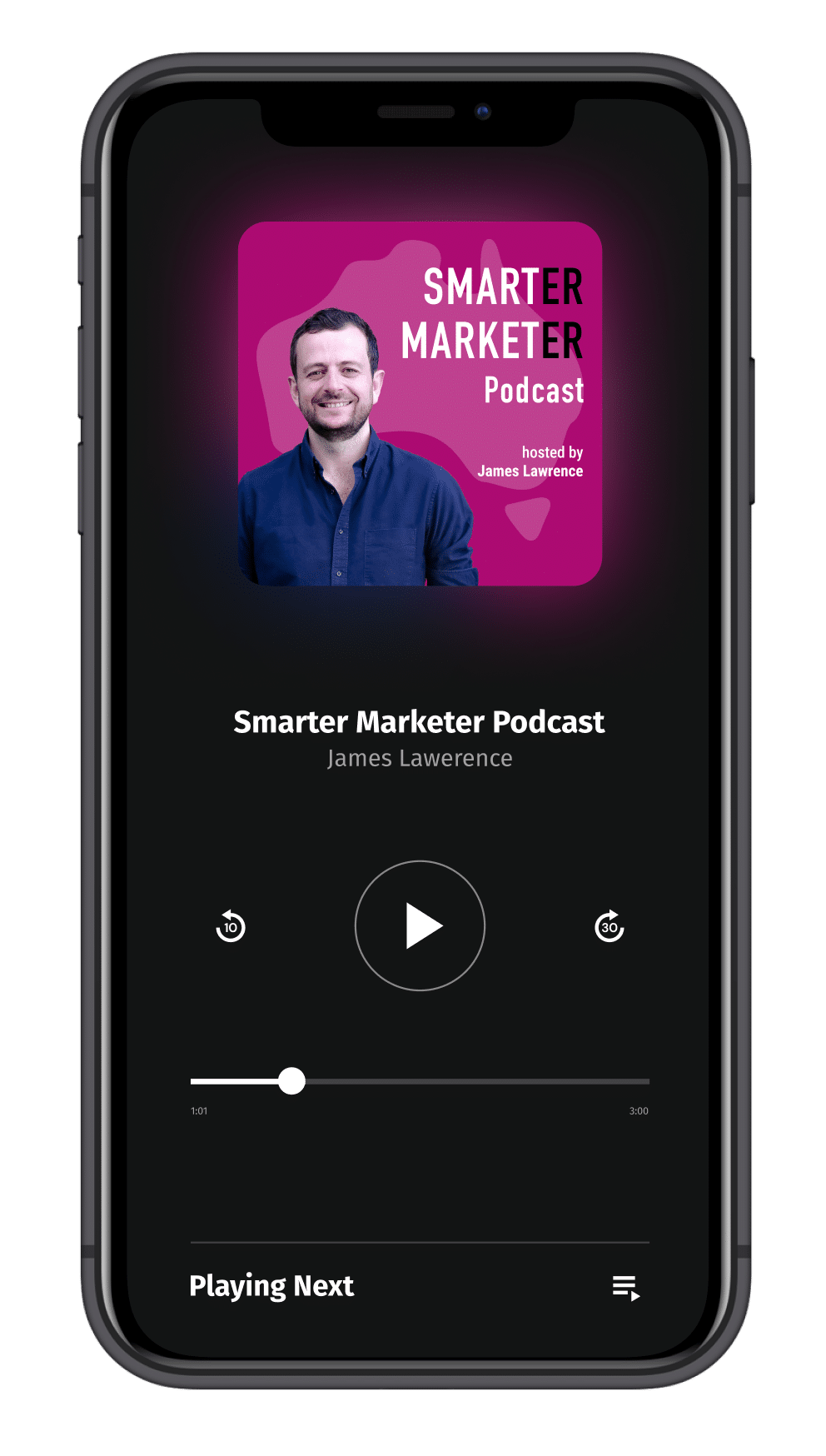
In this episode of the Smarter Marketer Podcast, host James Lawrence sits down with Rocket’s Paid Media Manager, Adrian Oguz, to unpack what truly matters when you’re running paid media in an AI-driven landscape. Adrian shares an unfiltered view on automation, performance loops, the limits of attribution and how in-house marketers can step back and measure what actually drives growth, and not just what looks good on a dashboard.
Key Takeaways:
- Why AI-driven campaign types often optimise toward the easiest conversions, not the most valuable ones
- How to recognise when Performance Max has fallen into the “existing customer loop”
- The hidden risks of lead-gen automation and why spam leads often spike before performance improves
- The simple macro metrics that reveal whether your media is genuinely growing the business
- How channels like YouTube can drive huge results without showing any conversions in-platform
- Why creative is becoming the new targeting, especially inside Meta’s evolving ecosystem
- How to design tests that prove whether a channel is actually contributing to growth
- When it’s time to scale spend, and when stability matters more than chasing the next tactic
Meet James Lawrence
Host, Smarter Marketer Podcast
Co-Founder of multi-award-winning Australian digital marketing agency Rocket, keynote speaker, host of Apple #1 Marketing Podcast, Smarter Marketer, and B&T Marketer of the Year Finalist.
James’ 15-year marketing career working with more than 500 in-house marketing teams and two decades of experience building one of Australia's top independent agencies inspired the release of Smarter Marketer in 2022, the definitive podcast for Australian marketers. The show brings together leading marketers, business leaders and thinkers to share the strategies that actually move the needle.
Each episode offers candid conversations, hard-won lessons and practical insights you can apply straight away.


James has delivered keynotes at:


Adrian Oguz
Paid Media Manager, Rocket Agency
About the Guest
Adrian Oguz is a Paid Media Manager at Rocket Agency, overseeing multi-million-dollar budgets across search, social and programmatic. With his clear, practical approach, he’s led multiple award-winning campaigns for various business types and industries across the APAC Search Awards and SEMrush Awards year after year.
You can follow Adrian on LinkedIn.

Transcript
James Lawrence: Welcome back to the Smarter Marketer Podcast. I'm here today with Adrian Oguz. Adrian, welcome to the pod.
Adrian Oguz: Thanks for having me, James.
James Lawrence: So Adrian is one of Rocket's paid media managers, and you're one of the top digital media specialists we've ever had at the agency. You've risen very quickly through the ranks. You manage many, many millions of dollars of spend across Google, social, and programmatic in the agency.
Campaigns that you've led have been really well rewarded and awarded in APAC Search Awards, SEMrush Awards, and the like. So we thought it'd be really good to have Adrian onto the pod to give in-house marketers a look under the hood—what’s real, what’s not—when it comes to managing paid media as we get into 2026.
Over the last kind of three, four, five years, there’s been so much change in the platforms, and there's been this huge shift towards AI. So Google’s PMax, Advantage+ in Meta—there's a huge spectrum of perspective on that.
There are some people that look at it and go, “This is incredible. We've got all this automation and can drive all these incredible bits of performance we never could, and we can take time out of optimisation.” Then you’ve got other perspectives where it's like, “Well, hold on… often the metrics look amazing in-platform, but things are a lot more nuanced than they look.”
So it'd be good to talk objectively around what's working, what's not working, things in-house marketers should be doing, things they should be cautious about.
And I thought a good place to start might be around what we call the optimisation trap. There's this push by platforms to move things that were once quite manual into automated flows. Is it as good as it sounds to just tick PMax and move things to Advantage+? What are the pros and cons?
Adrian Oguz: Yeah, it's definitely changed a lot. I would say probably in the last two years—maybe three—the amount of change that's happened across these platforms, especially in Google with Performance Max, Demand Gen, and a lot of the automation and AI stuff coming into play, is probably the most change that has happened in the last ten years in that whole space, which is huge in such a small period of time.
It's not specific to Google by any means. Mark Zuckerberg at Facebook, I think, spent a few billion dollars on Nvidia chips because he really backs this—he wants to improve ad tech, all of it, right? So that's the whole Advantage+ space.
I think it is good—the more ad tech evolves, the better for advertisers. Ultimately, the issue with these platforms and campaigns at the moment is that there are still a lot of obstacles they're trying to work through.
One of them is in the name: Performance Max. It's there to maximise your performance. That’s fantastic at face value. And I think if you're a smaller business with a new account and want to start advertising digitally, Performance Max is a great place to start, especially if you're an e-commerce business. Not so much for lead gen, but that's another topic.
The issues arise when you start becoming more of a mid-sized business. You're established, you already have a significant existing customer base. What happens is Performance Max will start very good, and over time it will figure out: “If I need to get from A to B—B being getting the most revenue and best performance possible—how do I get there?”
It works out very quickly that the best way is just going after existing customers. That’s where this optimisation loop comes into play. You might put a ROAS cap of 5x, you try to spend more money, but you can’t because the campaign’s limited by that ROAS threshold and you can’t scale.
The issue is that it’s going after that existing customer base. It might look very good in-platform, and then you look at incremental growth over the last year in the backend of your website and think, “I don’t know… it’s just not adding up.”
James Lawrence: To put that into lay terms: the AI is simply trying to find sales or conversions as cheaply as possible. What happens is that in a search environment, it looks at branded terms; in a display environment, remarketing.
Rand Fishkin has an analogy—he’s gone to war on this kind of tech in the last couple of years—saying it's the equivalent of handing out flyers to people walking into a retail environment and then asking them, “What was the last marketing touch point you had before coming into this store?” And obviously it's the flyer, but the flyer wasn't the thing that drove the person to buy.
Potentially some of these technologies are taking advantage of sales that would have happened regardless.
Adrian Oguz: Yeah, that's right. And there are ways to mitigate it. I'm not coming on here to make all these AI channels sound really bad—by any means. They are great.
One of the biggest ways to mitigate it is the importance of first-party data. That’s just the truth.
From a Performance Max perspective, a lot of businesses struggle to make it work for lead gen. The reason being: again, that analogy—getting from A to B the quickest way possible. For lead gen, B is getting the most leads possible. A lead form is just a lead form. It can come from a bot or a click farm on the display network clicking through and converting, and that makes the website look great.
That’s what happens with Performance Max—it goes very spammy. That's a big issue at the moment.
But the way to mitigate it is offline conversions. If you connect your CRM—say HubSpot—to Google, and feed in offline conversions only, then Performance Max has no alternative. It knows: “If I want good performance, this is what a lead is.” It's very black and white—it’s an MQL or SQL.
That’s where Performance Max can become fantastic. But for marketers who aren’t as aware, it becomes challenging.
James Lawrence: When you're working with a client at Rocket, what steps are you taking to work out whether paid media is growing a customer base—actually bringing in customers who otherwise wouldn’t find a client—versus harvesting existing demand?
Adrian Oguz: Yeah. I'll break it down from an e-commerce perspective, then we can get into B2B.
For e-commerce, it's very important to view your entire marketing strategy from a macro level.
Let’s say your goal is a 6x ROAS or you want to grow by a certain amount of revenue. Once that’s defined, then it's about tracking from a top-line perspective.
Typically that entails: “To get to the goal, we’ve put this strategy in place.” It could be Facebook to reach new users, Google—mainly Performance Max—and a bit of search to capture that demand. That's the strategy.
Then what I encourage clients to do is not look at it individually—Google vs Facebook—but together: “This is our strategy, and it’s working to achieve X outcome.”
You look out of platform. There are a few ways:
MER (Media Efficiency Ratio): total revenue over total spend. It’s basically ROAS across the whole mix.
New customer acquisition cost: how much can we spend to acquire a new customer at an affordable rate?
If you push more spend on Facebook and NAC rises to an unprofitable rate, then you know it didn’t work—even if in-platform says you're getting 15x ROAS. It might be driving existing customers.
So it's setting those top-level benchmarks and letting them guide platform decisions.
James Lawrence: How skeptical are you of in-platform data?
Adrian Oguz: There’s a lot to unpack.
Conversion tracking over 20 years started as this amazing concept. But I think over the last 10–15 years it has made us lazier as marketers.
Now, after iOS 14 and consent mode, things have changed. Google and Facebook are modelling data. If you're using a standard conversion goal, they’re predicting conversions based on likelihood, not actual visibility.
Tracking is becoming more difficult unless you opt for offline conversions and first-party data.
So we’re going back to how measurement worked 30 years ago—MER, CAC, top-level growth.
James Lawrence: Rand has a quote: “I’m not saying measurement is dead, but attribution is.”
You cannot perfectly measure the result of your marketing campaigns. It’s impossible for lead gen with complex paths.
Adrian Oguz: Exactly. I'm not saying don't look at in-platform attribution—look at it, but take it with a grain of salt. Use top-level metrics to guide what’s happening.
James Lawrence: Say on your top five most successful campaigns—how are you working with measurement?
Adrian Oguz: E-comm: MER + new customer acquisition cost.
Lead gen/B2B: depends—MQLs, SQLs, or closed deals.
Top-level:
“How many MQLs did you drive this month?”
“What was cost per MQL?”
Some campaigns have almost no attribution but huge impact—YouTube is a big one.
We had a client spend a decent amount on YouTube with zero attributed conversions, but branded searches skyrocketed and organic MQLs increased. Path-to-purchase latency was one month, so results materialised after two months.
James Lawrence: And it’s so important. We've seen in-platform data look bad, a change gets made, then three months later you think, “What were we doing?”
We had a retailer turn everything off because e-comm sales weren’t showing for big living items—and then wondered why no one went into the showroom. Digital was driving store traffic.
You need to look at real-world buying behaviour.
Adrian Oguz: That’s right. And also talking with the client—“How’s it going?”—that feedback is valuable.
James Lawrence: Where do you see businesses unintentionally wasting the most media budget?
Adrian Oguz: I think the biggest thing is intention.
It’s easy to say:
“We’re running a Facebook traffic campaign for awareness—you can’t judge it on conversions.”
Same with TikTok.
The trap is running many channels without isolating impact.
You need to be brave enough to say:
“Let’s dial down YouTube and Facebook for a month and see what happens.”
If nothing changes, efficiency improves, and it holds for three months—you know those channels weren't contributing.
It’s not that one channel wastes money—it's that marketers don’t know what’s driving results.
James Lawrence: How much pushback do you get when suggesting bold tests?
Adrian Oguz: Oh, you definitely get pushback.
What helps is going in with clear KPIs. For example:
“We want to invest 10k into YouTube this month to see a measurable difference.”
To see impact, spend needs to be meaningful. If you have a 50k budget and only spend 2k testing TikTok, you won’t see impact.
Set expectations, define what success looks like, and define what you'll do if it doesn't happen. Clients respond well to clarity.
James Lawrence: What are examples of platforms pushing advertisers in directions not in their best interest?
Adrian Oguz: Performance Max. AI-driven campaign types.
Meta and Google are spending billions on AI—they want everyone using these products: Demand Gen, Performance Max, Advantage+.
Advantage+ is improving—it’s working to an extent. Performance Max is improving, but there’s still risk of overserving warm audiences.
Facebook is naturally better at prospecting. Google captures demand, and if new demand is expensive, PMax avoids it to protect CPA/ROAS.
You need to use Google + Facebook together.
James Lawrence: Talk about non-AI campaign types. What role do manual campaigns play?
Adrian Oguz: In B2B and lead gen, marketers are more cautious of AI. A purchase is black and white; a lead form isn’t.
There’s nothing better than paid search in B2B/SaaS if there’s existing demand. Start bottom-of-funnel.
The challenge is when the niche is small and demand caps. That’s when you carefully expand.
Google is pushing broad match and maximise conversions. It’s powerful—if your account is seasoned with quality data.
Done wrong, you waste a lot of money.
James Lawrence: Practical tips for in-house marketers: when is it time for a strategic change, even if numbers look stable?
Adrian Oguz: When you've dialled in a stable strategy and results are predictable. Once performance is objectively good, it's time to ask:
“Do we want to try new things because what we’re doing is working?”
James Lawrence: If you were teaching a new marketer, what are the first things you'd teach them to ignore?
Adrian Oguz: I’d teach them to start with business outcomes.
Before channels, understand top-line measurement. Stakeholders care about incremental growth and efficiency—not CPM or CTR.
If you train yourself to think like a business owner from day one, everything becomes easier.
James Lawrence: You do a lot of auditing. When you open a Google Ads account cold, what do you check first?
Adrian Oguz:
Conversion tracking: double-counting (Google Ads goal AND GA4 goal tracking the same thing).
Spending in wrong regions: targeting presence vs presence or interest.
Networks: Search Partners spending—Ask.com etc—usually poor performance.
James Lawrence: And for listeners—Search Partners almost never performs as well as Google proper.
Adrian Oguz: Yeah, that's right.
James Lawrence: In terms of creative—what do marketers underestimate?
Adrian Oguz: How important creative now is—especially with Meta’s new update called ROAS Optimised Delivery (ROD/ROAS-based delivery).
Meta is moving away from interest targeting because of policy restrictions. Now you target through creative.
Your ad group is now a funnel. You need 10 different creatives: top, middle, and bottom-funnel.
Top-funnel creative might get 60–70% of spend. Bottom-funnel creative might get 2–3% but show great ROAS.
Don't pause top-funnel just because it doesn’t convert. It’s doing its job—introducing users, who are then converted by bottom-funnel assets.
Start thinking of creative as a pack: each asset has a role.
James Lawrence: It's almost a metaphor for digital—what looks good numerically isn’t always what’s working hardest.
Adrian, it's been great chatting. One final question: what's one piece of advice you'd give to an in-house marketer?
Adrian Oguz: Start looking at things from a macro perspective.
Ask:
“How is my channel contributing to the overall marketing strategy?”
Not just:
“How is my channel performing in isolation?”
James Lawrence: Awesome. Adrian, thank you so much for coming onto the podcast.
Adrian Oguz: Thanks for having me.