Does Your Business Need UGC? Here's How to Tell, and How to Get Started


Your audience has already made up their mind about you. They just haven't told you yet.
More than 58% of Australians now use social media to research brands and products before making a purchase decision (We Are Social, 2025). That figure is almost level with traditional search engines, and it's only growing.
Think about what that means for your brand. More than half of your potential customers are forming opinions about your business through social platforms, not just your website or ads or your sales team.
At the same time, trust in traditional advertising is eroding. 75% of Australians say they're worried about distinguishing real information from fake online, placing Australia among the top five countries globally for concerns around authenticity. That scepticism doesn't stay contained to the news feed, and spills over into how people evaluate brands and products.
Overly polished content is part of the problem. When everything looks produced and perfect, nothing feels real. And when nothing feels real, trust is hard to earn.
This is where UGC is changing the equation.
UGC is a strategic asset, not a cheap shortcut
There's a persistent misconception that UGC is simply a budget-friendly alternative to "proper" creative. It's worth addressing that head-on, because it misses the point entirely.
UGC works not because it's cheap to produce, but because it's credible. It's content that looks like it came from a real person's life, because it did. It fits naturally into the feeds your audience is already scrolling. It speaks in a voice they recognise and trust. And that authenticity directly influences how people feel about your brand and whether they act on it.
The data backs this up. Viewers spend 28% longer watching UGC ads compared to polished, brand-made content. UGC-based ads can lower cost-per-click by up to 50%, and according to Backlinko's UGC Statistics report, 86% of brands report that it boosts the effectiveness of their advertising when used in paid and owned media.
Does your business need UGC?
The honest answer is that if you're running paid social, probably yes. But here are some clearer signals that UGC should be part of your strategy.
You're targeting an audience that's social-first
If your buyers are spending meaningful time on TikTok, Instagram or YouTube, and most Australians are, they're consuming native-style content constantly. Polished brand ads interrupt that experience. UGC fits into it.
Your creative performance is plateauing
If you're running the same style of ads and seeing efficiency declining, creative fatigue is likely a factor. UGC offers a fast way to test fresh formats and perspectives without rebuilding your entire content approach.
You're struggling to stand out in a crowded category
When everyone in your market sounds the same, a real human voice cuts through in a way that branded creative simply can't replicate.
Your cost per lead is rising
If CPL is climbing and you're not sure why, content type is worth examining. UGC is consistently one of the strongest levers for driving efficiency in paid social.
How we've seen it work for Australian companies
Canva - B2C Saas
Canva's UGC strategy is baked into the product itself. Their Creator program gives designers a structured way to contribute templates and assets to the platform and earn royalties from usage, while their Design Community gives users a place to share work and exchange feedback.
The result is a self-sustaining content ecosystem where community participation validates the product and drives both acquisition and retention.
Heart of the Mountain Sydney - Recreation/Experiences
Heart of the Mountain's UGC strategy starts with the experience design itself. When you build something genuinely surprising and theatrical (the kind of thing people want to tell their friends about) the content brief almost writes itself.
Creators and guests share their visits organically on TikTok and Instagram because the experience gives them something worth sharing.
Orijen Pet Food - B2C Retail
Orijen's approach prioritises genuine product advocates. They seek out creators who feed their pets Orijen, then give them key messages but deliberately leave room for individual voice.
The result is content that communicates product quality through lived experience, like adventures with dogs on trails and real mealtime moments, rather than scripted marketing copy. In a high-trust, emotionally driven category like premium pet food is quite effective.
Haiku Lifestyle - Built to rent
A Rocket client, they saw a similarly compelling outcome. By shifting to UGC within the same budget, they achieved 78% more leads and a 44% lower CPL. Same spend, dramatically different results, simply because the content felt real.
These aren't isolated wins and reflect a consistent pattern we see across industries in Australia, that when UGC is used strategically in paid social, it outperforms traditional creative on both efficiency and conversion.
Frank Body - Beauty/Skincare
Frank Body's UGC approach works because the brand has made sharing feel like a natural extension of the experience instead of a marketing ask. Every package includes a prompt to share results using #frankeffect, and the brand's cheeky, body-positive tone makes participation feel like joining a community rather than endorsing a product.
Interestingly, they let real customer results do the talking across every channel. In a category saturated with aspirational imagery, that honesty is a differentiator.
Atlassian - B2B Saas
Atlassian treats community-generated content as a go-to-market strategy, not a social media tactic. Their massive community platform is structured around turning users into advocates who share expertise and champion Atlassian products within their own organisations.
In a B2B buying environment where decisions involve multiple stakeholders and long consideration cycles, peer-generated content at this scale makes the product credible before the sales conversation even begins.
Tourism Australia - G2C/Experiences
Rather than controlling the narrative, Tourism Australia creates the conditions for their audience to tell the story for them. Campaigns like #HolidayHereThisYear and #SeeAustralia give people a clear rallying point, then step back. The content that results is more diverse, more credible and more emotionally resonant than anything a production team could manufacture.
How to get started with UGC
Starting with UGC doesn't need to be complicated. Here's a practical way to approach it.
Start with your brief
The biggest mistake brands make with UGC is being too vague. Creators and customers need direction, a clear sense of the story you want told, the feeling you want to evoke and the product moment you want captured.
Decide on your UGC model
There are two main paths.
The first is working with UGC creators, the people who produce authentic-style content professionally but aren't necessarily your customers. This gives you more control and consistency.
The second is building advocacy from your actual customer base, encouraging real buyers to share their experiences in exchange for recognition, rewards or a platform. Both have merit, and many brands use a mix of both.
Test it in paid social first
The fastest way to understand whether UGC works for your brand is to run it alongside your existing creative in paid social and let the data tell you the story. Don't replace everything at once. Test, learn and then scale what's working.
Think beyond the ad
UGC is also powerful on product pages, in email campaigns and in organic social. When someone is close to a purchase decision, seeing real people's experiences can be the final push they need.
Build a measurement framework
Know what you're optimising for before you start. For most brands, that means CPL, conversion rate and creative performance benchmarks. Track UGC against your existing content so you can see clearly where it's adding value.
The bottom line
Buyers are doing their own research, and increasingly they trust people who look and sound like them, far more than they trust brand advertising.
UGC meets your audience in that space, and the brands winning in this environment are the ones who've figured out how to speak authentically, at scale, in the channels where their audience is already paying attention.
If you're keen to get started with UGC and not sure where to begin, our award-winning paid social experts would love to help. Get in touch.

Webinar: Digital Marketing in Australia
Join us for a live, moderated 60-minute webinar presented by James Lawrence on the latest changes to digital marketing. Understand attribution and data challenges, AI and how to balance brand and performance ads. Get 8 actionable steps to get digital right this year.
About the Author

Ash is Rocket's in-house Marketing Coordinator and the Producer of the Smarter Marketer Podcast. With a passion for marketing and sharp analytical skills, she excels at uncovering the hidden stories behind what drives marketing success.
Ash has worked with B2B SaaS companies in the FinTech and EdTech industries in Australia and India. She holds a Master of International Business degree from the University of Melbourne.
When not busy marketing Rocket, you'll likely find her brewing a delectable cup of chai.
Stay Ahead in Digital Marketing
Join 20K+ Marketers Who Get the Inside Scoop
Other Articles you might be interested in…
The Australian
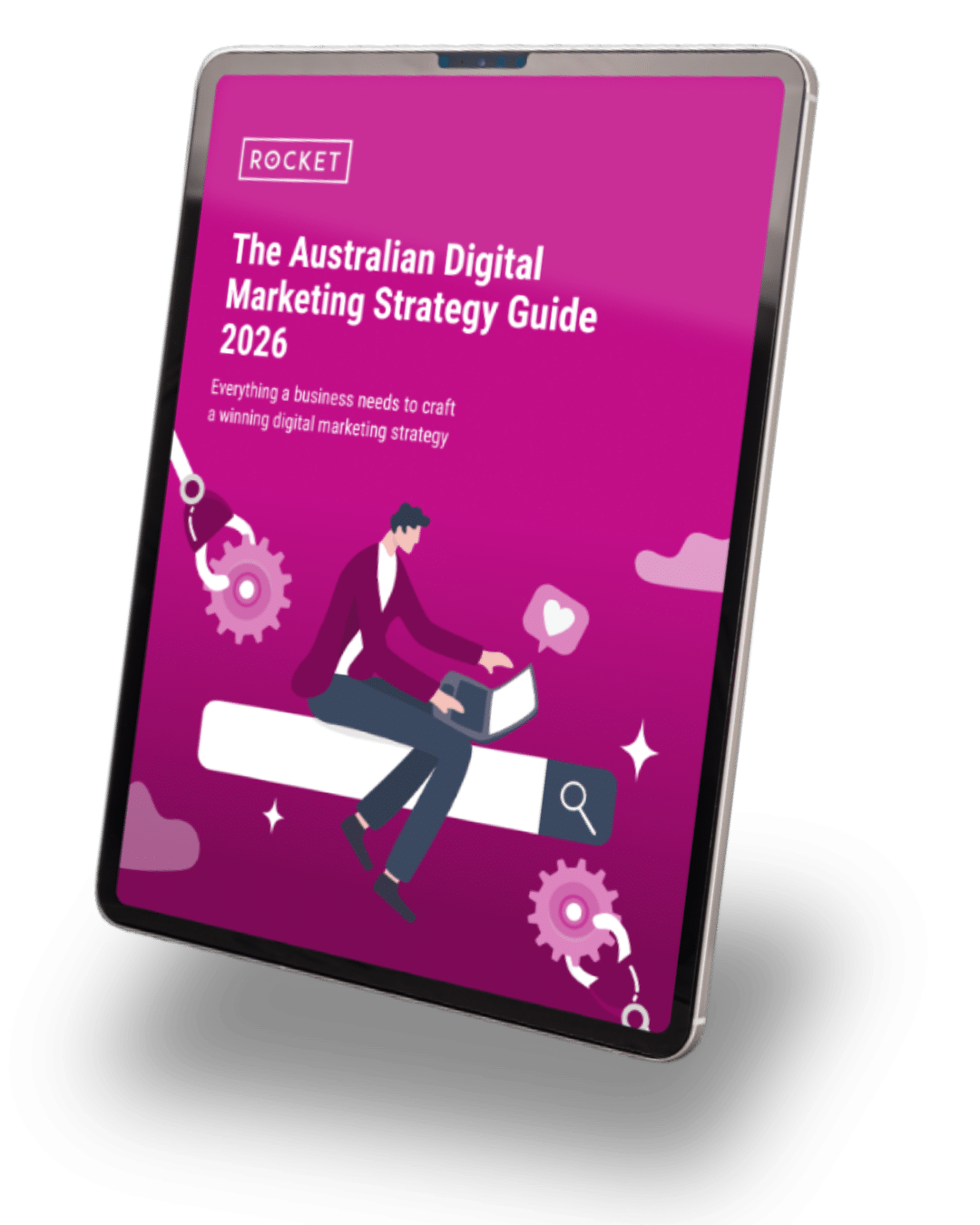
Digital Marketing Strategy Guide 2026
Everything an in-house marketer needs to craft a winning digital marketing strategy.