Creativity That Pays Its Way: How to Link Ideas to Commercial Outcomes

Episode Description:
When the pressure for short-term results keeps getting louder, how and why should you still emphasise creativity?
In this episode of the Smarter Marketer Podcast, James Lawrence sits down with Jules Hall, CEO and Founder of The Hallway, to unpack how creativity, data, and commercial thinking need to work together if brands want sustainable growth. From navigating short-termism and AI hype to building credibility with CFOs and boards, Jules shares a grounded, practical view on what effective marketing leadership looks like today, and what it takes to earn the licence to do truly great creative work.
Watch Cardboard Cake - The Hallway’s Cannes Lion-winning ad
Key Takeaways:
- Why creativity isn’t at odds with commercial rigour, and why “trust me” no longer cuts it
- How the best marketers link brand investment to real business outcomes
- What AI is actually useful for inside agencies (and where humans still win)
- Why short-term pressure is holding marketing back and how leaders can balance both
- How to “market marketing” internally and earn trust across the business
- What the Webjet rebrand reveals about modern brand growth and measurement
- Why relevance to culture still matters, even in a fragmented media landscape
Meet James Lawrence
Host, Smarter Marketer Podcast
Co-Founder of multi-award-winning Australian digital marketing agency Rocket, keynote speaker, host of Apple #1 Marketing Podcast, Smarter Marketer, and B&T Marketer of the Year Finalist.
James’ 15-year marketing career working with more than 500 in-house marketing teams and two decades of experience building one of Australia's top independent agencies inspired the release of Smarter Marketer in 2022, the definitive podcast for Australian marketers. The show brings together leading marketers, business leaders and thinkers to share the strategies that actually move the needle.
Each episode offers candid conversations, hard-won lessons and practical insights you can apply straight away.


James has delivered keynotes at:


Jules Hall
Founder & CEO, The Hallway
About the Guest
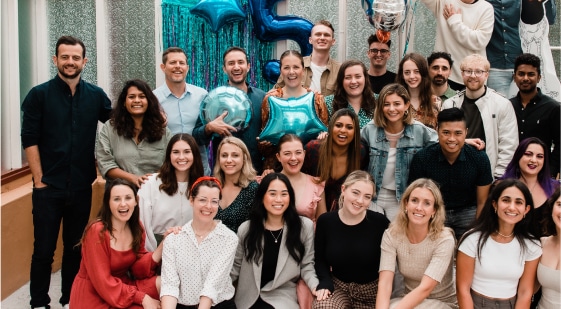
Jules Hall is the CEO and Founder of The Hallway, one of Australia’s most awarded independent creative agencies. Since founding the agency in 2007, Jules has led work for brands including Google, Suncorp Bank, BINGE and Webjet, and helped The Hallway earn honours such as B&T Independent Agency of the Year and Campaign Asia Independent Agency of the Year. In 2024, Jules and his team won a Cannes Lion for design - a standout achievement for an Australian independent agency.
You can follow Jules on LinkedIn.

Transcript
James Lawrence: Welcome back to the Smarter Marketer Podcast. I'm here today with Jules Hall. Jules, welcome to the pod.
Jules Hall: Hi James. Thanks for having me. I'm looking forward to today's conversation.
James Lawrence: So Jules is CEO and founder of the Hallway, which is one of Australia's most awarded independent creative agencies under your leadership. Jules, The Hallway has been named B&T Independent Agency of the Year Campaign, Asia Independent Agency of the Year, and many, many other accolades.
Last year you won a Cannes Lion, which I think is amazing for an Australian, independent agency. Well done. And you've worked with essentially a host of household brands, in your tenure with The Hallway, Google, Suncorp Bay, NZ, binge. You just did the relaunch of Webjet, which was quite high profile only a matter of weeks ago.
In terms of the conversation, I think it'd be interesting to start. Just around, the concept of creativity.
Obviously things have changed so much since you started the agency. I think it was in 2007, but I suspect that a lot has remained the same as well.
How, what are you seeing out there in terms of creativity delivering an impact when I think we've all got this pressure of, and the specter of AI and automation and tech and things moving so quickly. Like, how do we make sure that creativity isn't lost and what are you seeing out there in terms of, the clients you're dealing with?
Jules Hall: Yeah. It's such a good question, isn't it? 'cause it's the default position, I think, it's quite easy to feel
threatened by all the technology. I feel the opposite. And, I think this is the most exciting period in
the time that I've been running this business, probably, in the time I've been working in the industry.
And, I'll explain why. Marketers, we all implicitly understand the power of creativity. For a lot of us,
it's why we chose to work in this industry and whatever guys were doing, it's 'cause we. Enjoy. We
embrace and we see how creativity can fundamentally affect people and create unexpected and
superior outcomes.
Where we have perhaps struggled is getting beyond the implicit understanding to be able to provide
explicit evidence of how creativity works and what outcome it's going to deliver. And, that's been a
talking point for a long time. What's changed now? Is the scientific evidence. We have to prove that.
And that's really, I sort of say it started in 2010 when Byron Sharp published how brands Grow. We
went to the Benet and field era that we got the Ritz and there's a whole bunch of people and that's
just scratching the surface. There's an awful lot of work., System one has done some amazing work
as well on understanding.
The role brands play in driving commercial growth and the type of creativity that delivers what
outcomes. Now, why I'm so excited at the moment is what I've personally invested a huge amount
of time, and this business has spent a lot of time in over the past two, three years, is building that
framework so we can help clients understand what the outcome is going to be in advance.
Of investing in their brand.
James Lawrence:
Mm.
Jules Hall:
To deliver commercial growth. So getting beyond marketing metrics, linking marketing activities to
the commercial outcomes, being able to look at scenario planning and the type of content you've
gotta put into that, uh, investment framework. And that for me, that, that joins up some critical dots
that we've not had historically.
I saw, um,
James Lawrence:
James Herman. Speak recently, and one of the slides that resonated with me was that marketers
have done, a very bad job in marketing. Marketing. Yeah. And, it a very simple statement, but Ithink really powerful. And I think, we do have more devices now and exactly as you said, you know,
how brands grow and a lot of the roots and work, we have better tools in the toolkit.
To actually articulate and communicate the value of what we do, right?
Jules Hall:
We do. And, I often find myself going, why are we in this position where we've marketed marketing
so badly? And it's that, I bring it back to, the problem of just busyness. I think we're also busy doing
what we do on a day basis, and we know all this stuff.
But to carve out the brain space and really invest the time and the thinking in focusing on, the stuff
we need to do, the big picture., It often gets lost in the, there's so much every marketer has to do all
day, every day. You very easy to become sort of quite process processing, doing, type of a job,
which the antithesis of what the whole industry is all about.
James Lawrence:
Yeah, and it is, I think something I observe is that because a lot of the power of brand and the
power of great creativity, it takes time., Let's pretend you do have those measurement devices in
play, it takes time, right. For that, to flow out and, I can't believe we're gonna still talk about COVID
in 20 20, 20 25, but it does feel that, there has been since that time and now with all the instability
that I think we're dealing with in the last three or four years, so much pressure around
short-termism, you know, when the month, when the quarter, and that does create this busyness
and this short-termism, you need to have a foot in each camp, right?
And, it is the long and the short of it.
Jules Hall:
Yeah, you definitely do. You definitely do. And there's a bit of misnomer in here as well. Yes, you
invest in brand and it accumulates over time, but it doesn't do nothing in the short term.
James Lawrence:
Yeah,
Jules Hall:
it does something immediately. The trick is understanding what it's going to do and being able to
communicate that to other stakeholders and being able to link.
, Those shorter term observations of your brand investment to the midterm commercial outcomes, it
will deliver., And not using the words, trust me.
James Lawrence:
Yeah.
Jules Hall:
One of the things that we have to move beyond. It's past. Its sale by date is the big creative reveal.
The ego that, trust me, this is the answer., We've got data. We have to put data turning up to the
CFO and going, trust me, drop $10 million on this campaign. You can't communicate that to
shareholders.
That's not commercially responsible and that's not at odds with creativity. Being able to show it to
that conversation with here is the idea. It's right, because these are the insights that led into it. This
is the audience we're communicated to, and it will deliver this return on your investment because of
the linkage points that's commercially responsible.
James Lawrence:
, What are you seeing in terms of, how are the best marketers that you work with setting
themselves up for success internally? Like how are they creating that culture to get that buy-in and
to then get. The latitude to be able, to back creativity., What are the practical things they're doing?
Jules Hall:
The best marketers are brilliant at marketing themselves. It's a bit like we've all had that analogy of
the swan. It's gliding seemingly effortlessly across the surface, creating amazing work in this
instance, delivering highly effective campaigns so effortlessly.
There's the bits we don't see. Enabling them to be in the position to do that kind of work. They've
built the business case numerically. They've got the right measurement framework in place to give
them permission to earn their permission from the business, to do that kind of work and to invest
the money that's needed because they can show the outcomes that will deliver.
That, that empowers them to then focus on the bit we all want to focus on, which is creating the
great work.
James Lawrence:
And, I think it's an interesting observation just around the busyness, right? And, I think this applies
to all of us, even outside of marketing, right? Personal lives, whether you're in, a different role, the
marketing, but it is often the urgent comes at the expense of the important, right?
And I think great leaders outside of marketing, outside of business, often they have that. More
visionary tier, don't they, where they have that ability to sit to see the long term and see the big
picture, but then also deliver, on the details as well.
Jules Hall:
And it is so hard though, James like we all know that, don't we?
But, I don't think there's probably anyone in the world that thinks they've nailed that, like being able
to, that was it, quadrant to, important, not urgent.
James Lawrence:
Yeah.
Jules Hall:
Is the place where real change happens. Trying to get out of the important urgent quadrant.
James Lawrence:
I literally have it written, on my screen, focus on the important, not the urgent, but, my personal
assignment is still, filled with the 15 things that I have to get done to keep, the household and the
business going in that particular day.
Jules Hall:
Yeah. And, I've personally, this is a bit of a sidetrack. I find as I get like, this time of the year, we're
all generally a bit more fatigued, tired, at a personal level, the more sort of. Worn out you are, the
easier it is to default to that important urgent. 'cause you get a sense of satisfaction that you're
getting stuff done.
James Lawrence:
Yeah.
Jules Hall:
Versus the important not urgent.
James Lawrence:
, I think that's, not at all, out of place. I think it's a great comment. 'cause I think it is, like it, our
personal life impacts our professional life. Right. And, you do need to have a bit of balance there to,to give yourself the breathing room to, to focus on the more important, I can't help, but, when we
fired up recording this, you complimented me on the very professional setup that I had, and I
remarked to you that if I could show you what the rest of the room, it doesn't look like that. I feel like
that swan, it looks good from here.
I, I was
Jules Hall:
impressed.
James Lawrence:
, It's so cliched, but, I'd be fascinated to talk to you about. I think we've talked there broadly just
around the importance of creativity and the bigger picture and connecting it to business outcomes
and, that type of thing. At a more practical level, like you, you lead one of the most respected
independent creative agencies in the country.
You've been around for two decades from a like actual, pragmatic viewpoint. Like, where does AI
sit?, 'Cause I think there's just such diverse thinking around it and I, speak to clients and or non
marketers and it's just AI at like, how do you feel like, how's your team using it?
Is it as good as the hype merchants are suggesting it is?, Is it helping you move through things
faster? Do you use it at all? Do you see it as a threat? Like from a actual doing the work type
perspective? I'd be fascinated to hear your perspective on it.
Jules Hall:
My personal view, AI sits front and center in this agency.
Yep. Does it sit front and center of creating the work? Not necessarily. It sits front and center of this
business. I didn't use to be in that position two years ago. I think my honest reaction, I dunno if
others felt this way, I felt pretty threatened. I was like, oh man, I've spent 20 years building my
career, doing it this way.
This new thing's coming. Oh my God, I've gotta learn a lot of stuff here. I like, fundamentally, I got
the time and energy it was, I just felt very overwhelmed.
What we've done is we've brought expert specialist skill into the business and. That's people who've
got the right, one particular person that we brought in who's owning the role of AI in our
organization.
They've got capability and they've got attitude. I think attitude slash aptitude,
James Lawrence:
we're
Jules Hall:
all learning. So, where do I see AI adding real value in the agency business? The only reason
clients come to agencies is to get something from them. They can't do themselves.
That's generally for a business like this, it's come up with creative or media ideas that are gonna
materially move their business forward. So,
they're here, they're spending money to get the outcome. They want that process to be effective, of
course, 'cause that's how they know they're gonna get the outcome with the right checks and
measures. Our job is to collapse that distance from A to B. How can we, as rapidly as possible, get
to not just the idea, not the media strategy, but the outcome off the back of it.
So where AI has a massive impact is on ways of working.
The role of human creativity at this point in time remains our ability to come up with new ideas.
Original thought is superior to AI at this point in time, but there's a whole bunch of other distractions
and stuff and things that have to be done in agency business, and there's a remarkable amount of
complexity.
But what's conceptually quite a simple business.So how can we use AI to remove that stuff? That takes time. Like we are having a conversation an
hour ago about the briefing process an organization needs to sell more of a certain product. An ask
goes to the marketing department. How do we grow from point A to point B?
Which results in writing a brief for an agency present, talking through it, responding, oh my God, like
you've already seen, there's so many steps at this point. How can the agency involved earlier on in
that process? There needs to be enough checks and measures and different types of organizations
require different amounts of checks and measures.
James Lawrence:
Yeah,
Jules Hall:
but. Collapse process. Take as much process out of it as possible so that we can get from, here's
my need to, here's the answer.
James Lawrence:
We exist in this industry where LinkedIn is just this kind of speculation bubble and people projecting
what the future will look like.
And you know, you look at projections that were made two years ago and they inevitably turn out to,
not be right. I would be interested in your view. I remember, I think it was last year, Dave Drogo at,
south by Southwest, and they've invested so heavily in tech and ai, et cetera, was making the point
that the tech will never come up with that idea that makes the hair on the back of your neck stand
up.
Right. And that is human creativity and the ability, to. Tap in, I guess into the zeitgeist and what it is
to be human. But then I look at the advancements of the technology and like the system ones and
the testing of responses and at this point AI is this kind of, and we have a very similar perspective at
Rocket to yours, your top level takeaway of ai, right?
Like it's technology and embrace it. But it is the amalgam of average in many ways, right?
Mm-hmm. And often. Great creativity s when everyone's zigging and it almost runs contrary to the
idea that you're moving everything to the middle. Like do you foresee a world where the technology
does get to that point where it is not only coming up with the 15 ideas, but actually picking the one,
that will resonate?
Or do you feel that's just fanciful and we'll look back in 10 years and laugh at all, the kind of
projections that's what will happen to creativity.
Jules Hall:
I don't know. I don't know the honest answer. I do think it's pretty amazing. How quickly it's evolving.
The fundamental basis of AI, as I understand it, and let me caveat that I'm not the expert of the
technology that sits behind it, is that it's drawing on existing content. In response to prompts that we
give it. And therein, I think lies, that, interesting question of original thought versus repackaged
previous thoughts,
James Lawrence:
which
Jules Hall:
brings us to say, okay, what drives original thought or what makes thought interesting?
And what makes brand interesting is back to, the cultural component, their understanding of the
cultural zeitgeist at this moment in time, how they can tell their story. In a way that taps into how we
as humans are feeling at that moment or, the humans it wants to connect with are feeling, and it can
hold a, not necessarily a mirror up, but it can maybe hold a mirror up at the sort of entry level, but it
can move the conversation forward at a more advanced level in a culturally relevant way.
And we talk a lot about how co brands can fit into culture. For me, that's about relevance.
It's a brand demonstrating it can add value to. The lives of the people it wants to service or sell to.James Lawrence:
You kind of referenced this idea of the one big idea and trust me and take the leap and, I suspect
that when you started the agency, the landscape at that time probably was, you know, spend a
couple of million dollars on the big beer ad and mass market and one idea and get it out there and
it.
It does feel the landscape over the last 15, 20 years has changed so much. Right. And, this
fragmentation and different people accessing social media in different ways and different platforms
and everything does feel so much more dispersed. How does that impact the way that you
approach working with clients when you are coming up with this, you know, this is the business
problem we're trying to solve and this is the budget we have.
Go off and do it. Has that changed the way that you would think and approach solving that
problem?, We don't have those water cooler moments anymore. Not everyone tunes into watch
Channel nine news. The landscape that marketers have to market within.
Feels to me to be so fragmented, right? In terms of the way that you're trying to reach your market.
So when you're coming up with those ideas and how to execute the differences from how you
might've been doing that 15 years ago. You,
Jules Hall:
you are right. I agree with that, the media landscapes fragmented, the cultural landscapes
fragmented as well, particularly within, social media where you've got communities.
That have got nuanced cultural references and context that matter a lot to them, but others outside
that community may not know so much about. So I think that's very interesting for brands. The flip
side of it is if we do the right research, we can get amazing visibility into what matters to people.
We can find those communities, we can understand what they're talking about and sharing. And if
that is the audience that. We see as the growth driver for our brand, it gives us an amazing amount
of material to leverage to understand how our brand should show up in a way that's relevant to
those people.
So where it's perhaps more interesting is where you're going from that broad reach. And I think
even then the big cultural themes, even though we don't. Sit around the TV on a Sunday night as a
family watching a show and see the ad break, the big cultural themes still bubble to the surface.
There's enough dialogue that humans still have in the real world to share what they're talking about,
be it a show that's trending on binge, or a particular form of humor that's circulating. Whatever it is.
Those things bubble up and can be leveraged.
James Lawrence:
Yeah. Cool. It's an
interesting perspective on that.. Could we talk about the journey that the hallway went on in
becoming B Corp certified? I guess kind of the why of it and what that process was like and
the effect of doing it, for the organization.
Jules Hall:
Yeah, totally., It's interesting sort of little segue to maybe put that in context was I think we originally
started talking just after the Fat Cats campaign came out, which was B Corps first brand campaign
globally that launched in Australia and New Zealand.
So b and you did, you did that work, right? Is that right? Yeah, we did. Yeah. And so that, that
launched in September this year.
James Lawrence:
It's really cool. Maybe we'll try to include a link in the show notes. 'cause, I was watching that, in
prepping for this conversation. It's really cool.
Jules Hall:
Yeah, and it's delivering amazing impact. So that's delivering a six x return for the investment
versus baseline results you'd expect, at a brand level for B Corp. So we're super pleased how that'sgoing. So, why did we get on the B Corp route? And, this is really, really important.
This was about our corporate governance. It was about the way we wanted to run our business,
and we wanted to run our business in a way that was good for and to the people that work within it,
good for the community or the community that exist within, and the world that we share with
everyone else.
And we. Wanted to be methodical in how we went about that. We wanted to run a business in a
good way. Fundamentally, what we were very attracted to with B Corp was it gave us a framework,
of criteria. We had to focus on standards, we had to meet in different areas from simple things like
our energy suppliers, the.
Down to more complex and sophisticated areas like the policies that we have for our people. And it
is a very holistic framework. You get scored and you have to keep improving your score. Once
you've qualified, you meet certain criteria. You have to keep improving your schools to stay. B Corp
certified what?
B Corp is not for us. Is about us flying a flag and beating our chest because we're B Corp. It's us
making sure that this business is run in an ethically and socially appropriate way.
James Lawrence:
And
how do your clients respond to that or prospective clients? Is it something that, is a conversation
that you're having through that process or is it something that you do keep a little bit locked away
and, within the hallway itself?
Jules Hall:
, It's probably between the two is the answer.
I could definitely talk about it more., The reason I am considered in how I talk about it is. We don't
believe that every single brand in the world should have a cause related or socially conscious led
purpose. Many brands don't actually deliver on that, can't deliver on that.
And in some instances it would be weird, if they did, and that was their flagship narrative. But every
business should run itself in an ethically appropriate way. That's very, very important. So what I
don't want people to think is, oh, ring the hallway and I'm gonna get a social purpose led brand
platform.
That's what they specialize in. Some brands that's appropriate. Suncorp Bank banking you can feel
good about, had a whole bunch of really interesting product proof points that enabled them to
legitimately play in a space that had a, community and environmental. Lens upon it, other brands
that they don't have those proof points, it would be wrong to try and shoehorn that in.
Yeah, and we don't, what it does enable us to do is a lot of big organizations when they go through
the procurement process are asking their suppliers how they're running their business. Asking for
evidence of the fact that they're performing to certain standards. It gives us that framework. Yeah.
Which is very valuable.
James Lawrence:
Nice. It feels, it comes down to authenticity, doesn't it?,
Jules Hall:
Yeah, totally.
James Lawrence:
Yeah., And, whether it's marketing or politics, I think Australians have a quite sophisticated BS
detector. And sometimes. It'll go unsaid or unspoken, but I think Australians are pretty canny at
knowing when someone is true to themselves or a business is true to themselves.
Right. And trying to be something you're not will often, backfire in pretty pretty sad ways. Yes. Yeah,
totally., We touched on it earlier, just around marketing leaders and how to market marketing within
an organization you work. With the Marketing Academy and,it'd be just interesting as to what your advice or perspective on marketers, the things that marketers
should be doing to. Evolve their career to get taken more seriously within their organizations. Like,
what are the things you see the most effective marketers consistently doing? I like, I think the swan
analogy's a great one.
, But, any other observations? 'cause you've obviously worked with many, many marketers in lots of
different types of organizations., It'd be interesting to see your kind of perspective on that or to hear
your perspective on that.
Jules Hall:
That's a massive question, isn't it? I'm here for it, Jules.
My brain is spinning with all the ways I could answer that. The best marketers have got amazing
clarity of thought. They're very intentional. They've got a clear understanding of what their personal
success and the organization's success looks like.
They're very considered in where they apply their effort. Certainly when you get to a leadership
level, their emotional intelligence and interpersonal skills become, very important. 'cause a leader of
any organization, you can't do it all yourself. And I think that's that classic development challenge
that all of us face at some point in our careers.
We go from being the doer to the leader, and you've gotta. Shift. You still need to understand the
context of the people doing the doing. You gotta keep your a in in that regard, but you've gotta your
superpower nans to become helping them to perform at their best.
Then the other side of the ledger is stakeholder management.
Let's call it stake. That sounds such a boring description, but let's call it stakeholder management.
You've got lots of different stakeholders and organizations. You've got product experts, you've got
financial experts, you've got sales experts, and they're all experts. They all know how to do your job
better than you do, and they're not generally shy of telling you what you should be doing.
And I do think
James Lawrence:
that, marketers suffer from that more than any other. Function in a business., Not many people are
telling finance how to do their job. It's, it's, yeah. It's always everyone telling marketers how to do
their job, right?
Jules Hall:
That's right.
That's right. And so, one of the most important skills is being able to use evidence efficiently and
effectively evidence to substantiate why you are going to do something. Evidence to demonstrate
the outcome you delivered once you've completed something. And to do that, being concise with,
that evidence.,
James Lawrence:
It's a good takeaway. From the most junior marketer to the most senior, right? Because I think it's
whether you're trying to, if you're at the junior level and you're trying to convince someone above
you that you wanna run a very small social media campaign to do X, that might be the biggest thing
you have in your control at that moment, but still evidence backed.
How are we gonna measure success, et cetera, versus the CMO at. Yeah. A listed business and
having to deal with a skeptical board. Right. And I suspect you're probably not getting to that point
without that ability, but it is something that you can apply on, a smaller level, and a larger one. Well,
this is
Jules Hall:
why we've re branded our business in the last six months and that's been a very considered, and
there's probably been three iterations of our brand in 20 years.
And this is the third one to calculated creativity. Creativity is still the most important thing we do as a
business and as an industry. 'cause that's the magic that people fall in love with it. It's whatconnects brands to audiences. It's what shifts behaviors, it what's make people do things they
perhaps didn't expect they were gonna do.
But the calculator component is what makes businesses comfortable to commit to the investment
that's required to do the great work.
James Lawrence:
Maybe that segues, maybe it doesn't. I remember in my very first job in the early two thousands, we
were dealing with webjet like way back in the beginning.
And for whatever reason, I've always just used it as my platform for. Comparison and particularly
domestic flights and whatever else, but, it was never lost on me that I don't know the brand and the
website, and I still had the same feel from about 20 years ago. So more. Yeah, exactly.
, And obviously just talk about as much as you can, but I think it's always a brand that, I personally
have always felt quite warm towards and a brand that. I don't know, feels Australian and has kind
of, I'm not sure if that's true.
It might be a New Zealand presence, I'm not sure. But just, yeah, if we could talk through how that
piece of work came to be and what the rollout has been is at the end of it, is there more, but
obviously, only reveal what you can.
Jules Hall:
So it's been a huge program of work. It started over 12 months ago and it.
It actually was driven, the whole program was driven by a shift in their business. So they have
historically had a B2B component and a B2C component of the web jet business. The B2C is, what
we, the customers experience. The website you talked about. They demerged the two businesses.
Created two separate listings on the Airex B2B product and a B2C product.
The B2C product was given a mandate to double revenue over a five year period. They brought in a
new group, CEO and that had all happened before I got the phone call. And I've known the guys
over there for a long time. Um, we've done, a fair amount of work in the OTA online travel agency
space over the years with different brands and.
The brief that we got initially was we've got this growth goal. We need to understand where we're at
today and work out how we're gonna deliver on it. So, McKinsey came into the process fairly early
on. We collaborated pretty closely with the guys at McKinsey. We brought in a research partner fed
a bunch of the McKinsey questions into that, which helped with the audience size that we were
doing.
The big outtake from that was exactly what you just said. Australia's got great it's got high levels of
awareness. The product maybe not perceived to have evolved as much as it could have done, and
that was actually the product behind the scenes is really, really smart.
Mm. It was more, the veneer on the front end that, that we see the slightly dated logo, the interface
design that was ship creating a slightly unfair perception. So we went through the process of who is
the audience that's going to drive the growth. What products they're gonna buy In parallel,
McKinsey doing a bunch of work to evolve the product suite that Webjet had.
Once all that was locked down, we went into the process of writing the brand strategy. How do we
need to position the brand to win the hearts and minds of this new audience that we've identified?
Then we went through the process of refining the brand identity. Then the question was like, well,
how much are we gonna spend on media to get there?
So then we went to a really interesting process of communication strategy with the broad umbrella,
but really detailed investment modeling. What do we need to spend through what channels to get,
what outcomes with different audiences? What are the roles of the different products in that, that
then fed into the buying agency, which is Nun who actually bought the media.
In parallel to inform that we did a lot of interrogation of Webjet's historical sales and marketing data.
So we looked at when they'd run different types of communications, top, middle, bottom of funnel,
what outcomes they'd seen at a sales level. We looked at what the linkages were so that we could
create.
Frameworks and models so that we could then start to in create informed investment scenarios and
commercial outcomes that gave us different options, enabled Webjet to decide what type of
investment they wanted to make. Based on the outcomes they were after, which then informed the
content that was ultimately created and fed into the ad campaign.So that, a very high level summary of a 12 month program of work, which has led to web jets. First
real fundamental brand evolution. It's 27 year history.
James Lawrence:
That's really cool. Is it too early for any kind of data in terms of, oh,
Jules Hall:
numbers are categorically going the right direction? That's awesome.
And it's a really good example of, where you've got clarity of the different metrics and how they
relate that a brand investment does have short term impact.
But it's what short term impact it has and how that correlates to the medium and longer term growth
that, you are trying to deliver.
James Lawrence:
And I think Ritz says, I'll probably mangle it, but it's great. Long-term marketing can have short-term
results, but rarely does great short-term marketing have long-term results. Yeah, that's right. The
paradigm there. Also, and this is outside of my necessarily field of expertise, but from, a lay
person's viewpoint.
It also just feels like a reworking that still pays homage to the original brand. Could you know?, It
isn't completely lost, which I think is a nice thing.
Jules Hall:
That is. I'm so glad you said that because, we spent an awful lot of time talking about, everyone
remembers, the mouse. That was a plane.
It was talked about. The mouse plane. And it was like, are we more mouse? Are we more plain?
Are we more? And it was, we did a lot of testing. As part of the calculated creativity framework,
using ideally and other research partners to, to validate the brand identity at different stages we are
going through before we committed to final execution, so that we were moving it forward, but we
weren't breaking from the past.
'cause that heritage is really important to that brand and we wanted to not walk away from it. We
wanted to build on it. And extend it and create the springboard for the next chapter of growth.
James Lawrence:
Because I think I might've seen it before. I knew that you guys did it, and I definitely had a really
positive kind of just initial response, right?
Just, as a punter. How do you win a canned lion?, I'm very curious, as to how, maybe less the
actual like Yeah, what's the process? How do you do it? How did you feel after it happened?
Jules Hall:
Well, the process is quite straightforward. You've gotta create something really good and pay a load
of money to enter it.
, It's the bit in between those two. That's a relatively complicated. So, the line that we got last year
was in the design category, and it was for a piece of work we did called the cardboard cake, and it
was. We collaborated with the, celiac Institute of Australia and with a gluten-free bakery called the
Whole Green Bakery and.
I've actually got, one of my daughters is Celiac. Some other guys in the agency had Celiacs in their
family. Celiacs is extreme gluten intolerance. It can come with or without symptoms. My daughter's
asymptomatic. But what it does is if you have gluten, it collapses the VII in your intestine, which
means you can't absorb the nutrients, which has got all sorts of potential long-term impacts.
So it's really, really important that celiac don't eat gluten. They don't think gluten is fine. But there's
complexity in that and it's not massively understood. And the one of the big problems is. There's
and this is really interesting insight that came outta some of the early research. A lot of gluten-free
food can be quite bland, and sometimes, a sort of a common accusation that came out was taste a
bit like cardboard.James Lawrence:
Mm-hmm.
Jules Hall:
, You know, anyone that's got a gluten intolerant or celiac in their family, particularly if they're a kid
who just tell you how it is may, I may well have heard that sort of description or similar words. The
whole green bakery had set out to create gluten-free food that was just as delicious as normal food,
and they focus on baked products, cakes, and creeks and so forth.
So we collaborated with them to create. A cake that looked like cardboard but tasted like a beautiful
cake. And it turns out it's quite hard to do that.
James Lawrence:
I could imagine. Yeah.
Jules Hall:
And it was, so, you had to, you know how cardboard's got those sort of sandwich construct where
you've got two layers and you've got the sort of the reinforcement Yeah.
Irrigation in between, which we recreated with pastry and how you can create it thin enough to be
authentic. But still retain the corrugations and yeah, we did not get that right on day one., Many
days later, we got something that was pretty amazing., And the design work that went around it the
craft that went into that, it's a really good example of the power of great craft to lift, a really good
idea to a very, very special place.
And then
James Lawrence:
, What were, the channels that went out onto?, And I think we'll try to include a link to that as well in
the show notes. It'd be good. Yeah, definitely.
Jules Hall:
It's DM was, 'cause, there was a tiny budget that we had to actually get it out there. So what we did
was, we actually created cardboard boxes with the cardboard cake in it, which we sent to key
influencers, media personalities.
Leverage their networks to get the endorsement that gluten-free food when done, when created in
the right way can be really magical magical treats. It's pretty cool. It's a really, um, the award
James Lawrence:
really rewarding creativity, right? An idea. Yes.
Jules Hall:
Yeah. That's what Ka does so well., The work that gets up there is.
It's the purity and the quality of thought and the integrity of the execution that you've got to have.
Like, it's such a high standard. Everything's amazing. And when you go to Cannes and you walk
around the displays they've got of all the work, and it is just, everything's so, so good. Like in
Australia has, and New Zealand has historically done very well on that stage and punished above
our weight, which, makes me so proud of what this market is able to achieve against much bigger
markets with many more people and much more budget than we have at our disposal.
James Lawrence:
, That's quite a funny segue. Was the, literally, the last thing I was gonna ask you, and maybe
you've answered it, maybe you haven't, is what's, it's been, I guess 18 years since you're you
founded the whole way. Yeah. What are you most proud of?Jules Hall:
Uh, I'm, the thing that I get real satisfaction from is the, and maybe this is a bit boring, but, it's the
outcomes we deliver for our clients and how it helps their businesses, their careers progress.
I get a real sense of satisfaction from that, and that's made possible by the brilliant people that we
have in this business and how we are able to work together to deliver those outcomes. And in turn,
those people. Seeing their careers progress and them develop as humans. Like it's, yeah, I
suppose you could bring that back to, the human outcomes I suppose is what I get real satisfaction
from.
James Lawrence:
It's a great response. Jules, thanks so much for coming onto the podcast. It's been, a very,
enjoyable conversation with you. Great. Really appreciate it James. Really good to chat.
Jules Hall:
Thanks, mate. Having me. Ah, that was great.