12 Insanely Effective B2B Retargeting Ad Examples to Capture Warm Leads


B2B businesses typically have a long sales cycle. So, staying top of mind with your prospects is non-negotiable.
Retargeting ads are used to achieve just that and much more. But first things first…
Remarketing vs retargeting: What's the difference?
If you’re confused about these terms, take it easy, you’re one of many. Typically, retargeting involves paid video and display advertising. You show ads to people who engaged with your website. These ads are shown across numerous digital marketing channels, including the Google Display Network, YouTube, Facebook and even on LinkedIn. (Unsure what the different marketing channels are? Read up on digital marketing channels here.)
On the other hand, remarketing involves using email marketing that is used to re-engage your database.
Today, you can use your email lists to build ‘audiences’ for display advertising. This could mean displaying Google ads to people on that exact list, creating similar audiences and the like, further blurring the line between the two. For B2B remarketing, this overlap is even more common since campaigns often combine email and paid channels to re-engage the same decision makers.
But it doesn’t matter what you call it. Remarketing or retargeting, both terms ultimately serve the same goals in your marketing strategy.
Why retargeting is an important part of your digital marketing strategy:
- Helps maintain brand awareness within your most qualified digital audience.
- Engages your target audience and drives them back to your website.
- Increases the chances of conversions on your site with higher trust and loyalty.
Retargeting ads sit in the middle and bottom of your marketing funnel
Retargeting ads are not built for the top of the funnel. They work best once someone has already interacted with your brand, such as visiting your website, watching a video or downloading a resource. In this stage, you’re reminding people who already know you exist, keeping your brand in their line of sight and guiding them towards that next step.
This is where understanding your B2B retargeting audience really matters.
To learn where retargeting fits best, let’s look at how it supports both the middle and bottom stages of your marketing funnel.
- Middle funnel (consideration): Used to re-engage prospects who are still researching or comparing options. For example, a potential client downloads one of your e-books but doesn’t make contact. You can retarget them with ads showing client testimonials or a short explainer video that reinforces your results and credibility.
- Bottom funnel (conversion): Focused on driving action such as demo bookings, purchases, form submissions, etc.
What if someone has visited your service pages a few times but hasn’t reached out? You could show them an ad that reminds them what they gain by taking the next step, like booking a short strategy call or getting a quote. It gives them a small push to turn interest into action.
B2B retargeting ads are designed to nurture existing interest and move warm audiences closer to action. They’re not about chasing new traffic but about staying visible to the people already considering you and giving them another reason to come back.
12 Content ideas for retargeting ads
Below are some B2B retargeting ad examples that help brands maintain visibility and achieve measurable results throughout the funnel.
1. Case studies
Demonstrating tangible results and client stories with B2B retargeting ads is a fantastic way to build authority with your prospects.
However, avoid linking your ad to a PDF document. Instead, lead your audience to a page that gives a summary of how you solved your client’s problem. Keep the page short and include pictures and videos to increase engagement.
As for the ad itself, consider leading with a stat and including your client’s name within the headline. It’s more powerful to present an ad on the lines of:
‘How [YourCompany] helped [Client] Reduce Costs by 35% in 6 months’
instead of:
‘[YourCompany] X [Client]: ROI Case Study’
You can take this further and develop a range of case studies that cater to different personas and industries within your target market. If your prospect hits a specific industry page on your site, set up your retargeting ads to show them the relevant case studies.
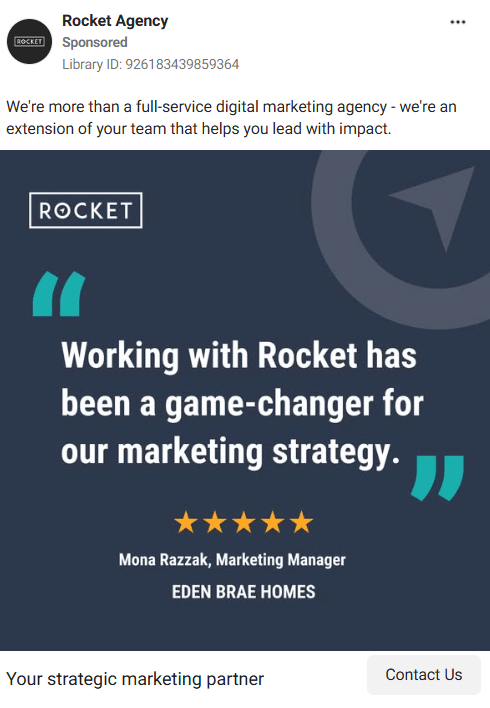
2. Client Testimonials
Your clients can sometimes do a better job at selling your products and services than your own team. They’ve experienced what it’s like working with you, paid for your services and in turn, can present an unbiased opinion to the wider industry.
It’s not uncommon to get a mixed bag of testimonials. Some will be strong, others less so. It’s important to first work with your team to request and collect testimonials from your clients, get approval to use them in your marketing and then choose which to use.
Using snippets of a longer testimonial works best. Ideally, you would include the name, title, picture and company of your client in your ad creative. This increases the authority and reliability of your company.
Leverage this social proof by creating eye-catching static, GIF or video ads and add these to your retargeting mix.
3. E-books/ Downloads
Using highly relevant educational content is a no-brainer for B2B retargeting ads. These are most effective when the title of the e-book or the downloadable addresses the pain point and your buyer persona directly. This kind of remarketing content helps strengthen brand recall while offering something genuinely valuable to your audience.
For example, ads that lead with:
‘5 Strategies to Increase Bookings for Australian Hotel Owners’
is better than:
‘How to Increase Bookings’
Needless to say, the ad itself is not going to help convert prospects to customers. The content itself needs to be timely and relevant. Ideally, downloads should be followed by compelling email nurturing as well.
Like you would for case studies, it’s best to develop two to three relevant and topical lead magnets that address your target personas/prospects in different industries. Depending on which web pages prospects engage with, you can present the most relevant e-books via retargeting ads to increase the chances of a conversion.
4. Explainer Videos (Featuring Your Team)
Short bottom-of-funnel explainer videos that talk about your specific B2B services, features, results and more make for fantastic retargeting content. These videos could also feature your front-line sales team, increasing familiarity and authority.
While you don’t need an entire production team to film these videos, make sure they are professional and include a clear call to action.
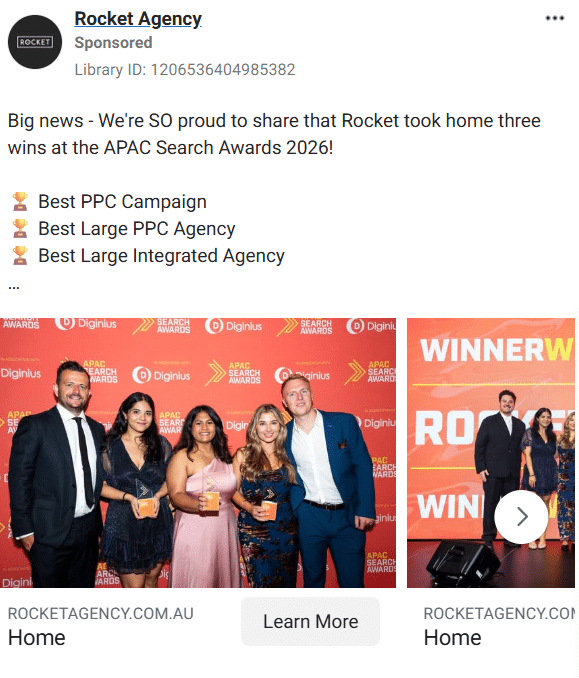
5. Award wins/Accreditations
Being recognised and recommended by an unbiased third-party authority is yet another content angle you could take with retargeting ads.
These ads can lead to a press release or a blog article on your website sharing more details of the award win or accreditation you have received. The creative can be static and feature your team. Meanwhile, the ad can be styled to look like a news article for added credibility.
These ads will help increase your authority in B2B marketing strategies, especially when the buying journey involves multiple stakeholders who need to be convinced of your expertise.
6. Dynamic Ads Featuring Previously Viewed Products or Services
Dynamic ads show people the exact products or services they’ve already looked at on your website. It’s an effortless but powerful way to remind them of what caught their attention and encourage them to complete their journey. These ads work well for re-engaging your B2B retargeting audience and recovering potential conversions that might otherwise be lost.
Setting them up is surprisingly easier than you think. Use product feeds and tracking pixels in Google Ads or Meta to automate ad delivery. Once connected, the platform updates your ads in real time, showing each user the most relevant option based on their activity. It’s a simple way to keep your brand in sight and bring interested visitors back.
7. Product-Specific Discounts
Product-specific discounts work well for people who’ve already shown interest but haven’t taken the final step. If someone’s viewed a product or pricing page and left, a small, time-limited offer can be the reminder they need to come back. It keeps your brand top of mind and helps turn curiosity into action.
Start by creating segmented audiences of users who viewed certain products or services. Then pair those audiences with personalised promo ads that match what they were exploring. This keeps your message relevant and focused, making your retargeting strategies work harder to bring those prospects back.
8. Time-Sensitive Campaigns
Time-sensitive campaigns tap into urgency to spark action. Countdown timers, flash sales or low stock alerts work best when aimed at people who’ve already shown intent to buy. A reminder that the clock’s ticking can be all it takes to turn hesitation into a fixed and final decision.
Plan these campaigns with clear start and end dates, and use frequency caps so your ads stay effective without overwhelming your audience. Keep your message simple and direct, giving warm leads a clear reason to act before time runs out.
9. Seasonal or Event-Based Offers
Seasonal and event-based ads work because they meet your audience in the moment. When your B2B retargeting aligns with key dates or industry events, your message feels timely and relevant. Try EOFY offers, conference tie-ins or holiday campaigns that speak to what’s happening right now. It’s showing up when your audience is most active and ready to engage.
Get ahead by planning creatives and schedules around your business calendar. Keep the message sharp and aligned with the event, and make sure the offer adds real value. With the right execution, it keeps your brand part of the moment and gives warm prospects another reason to click through
10. Free Value-Driven Resources
Sometimes, a little free value is all it takes to bring a lead back into your funnel. Offering tools like templates, quick audits or calculators gives prospects something useful while showing off your expertise. It keeps your brand front of mind and builds trust with people who might still be weighing their options.
Set up simple gated content or offer pages that are quick to access and easy to understand. Keep the process friction-free and focused on helping. To drive real engagement, check out our tips on building a landing page that converts and for avoiding mistakes that could prevent you from achieving this.
11. Webinar or Live Demo Invitations
Webinars and live demos are a great way to turn curiosity into real connection. They let warm leads see your expertise in action and understand the value behind what you do. Retarget people who’ve already looked at your solution or pricing pages and invite them to a session that answers their questions and builds trust.
Keep the invite short and clear, with a headline that sells not only the event, but more on the benefits of attending. Focus on what they’ll walk away with and why it’s worth their time. Need ideas for hosting one that actually converts? Here’s our guide on how to run a webinar.
12. Product Upselling or Cross-Selling
Retargeting doesn’t end at the checkout. It’s a chance to stay connected and keep delivering value long after the first purchase. Encourage add-ons or upgrades that you think will genuinely improve your customers’ experience. It’s a simple, effective way to build loyalty, lift overall spend and nurture existing customers without coming across as pushy.
Use purchase or browsing history to build audiences and serve carousel or bundle ads that actually make sense to them. Each recommendation should feel like good advice from a trusted partner and help customers get more value from the products they already use.
That said, if you’re looking for inspiration, these b2b retargeting ad examples show how the right creative and timing can turn passive interest into qualified leads.
B2B digital marketing rarely takes a linear path. Retargeting ads provide an excellent opportunity as digital touch points at a reasonable cost compared to other prospecting ads. Speak to our digital marketing experts at Rocket Agency here to set up your winning retargeting ad strategy, or call us on 1800 914 355.
FAQs
Retargeting works best once someone has already shown interest in your brand. This could be after visiting your website, abandoning a cart, downloading content or starting to fill out a form and not finishing it. In B2B remarketing campaigns, it’s also useful after engagement with resources like webinars, case studies or pricing pages. The goal is to reconnect while your brand is still fresh in their mind.
Costs change depending on the platform and how your campaign is set up. On Google Ads, you’ll often pay per click. On Meta or LinkedIn, charges are usually based on impressions. Audience size, competition and ad relevance all play a part. What matters most is testing and optimising so you get the strongest return for your spend.
Start by segmenting visitors based on intent. Build lists of users who have looked at key pages, viewed pricing, downloaded a resource or watched a video. Add tracking pixels from Meta or Google Ads to your site to gather this data. From there, refine your audiences by engagement level or recency to make sure your ads reach the people most likely to take the next step.
Retargeting lives in the middle and bottom of your funnel. It bridges the gap between awareness and action by reconnecting with people who already know your brand. At this stage, your messaging should focus on credibility, proof and clear value to move warm leads towards conversion.
Seeing the same ads too often can cause ad fatigue, so update creative regularly and set frequency caps. Privacy restrictions can also reduce tracking accuracy, leading to smaller audiences. And while retargeting is powerful, it works best alongside top funnel marketing that brings in fresh traffic and keeps your pipeline healthy.
They do, and they remain one of the most effective parts of a digital marketing strategy. Retargeting keeps your brand visible to warm audiences and continues to deliver stronger conversion rates than prospecting alone.
At Rocket, we saw this in action with the University of Notre Dame Australia. Using a full funnel strategy across Google and social, we combined retargeting with tailored creative and smart audience segmentation. The result was a 14 times increase in course applications and a 77.8 percent lift in return on ad spend over six months.
Results like these show that effective retargeting strategies continue to nurture interest and convert qualified audiences into real leads.

Webinar: Digital Marketing in Australia
Join us for a live, moderated 60-minute webinar presented by James Lawrence on the latest changes to digital marketing. Understand attribution and data challenges, AI and how to balance brand and performance ads. Get 8 actionable steps to get digital right this year.
About the Author

Eshita is Rocket Agency’s Head of Marketing and Email Lead. Eshita has been a finalist at the B&T Women In Media awards in the marketing category for her success in scaling Rocket’s own marketing efforts.
Previously, Eshita was the Marketing Manager at SalesITV where she was responsible for executing the marketing strategy and operations focused on lead generation, lead nurturing and sales conversion.
She has had in-depth experience in monetising owned media channels and scaling and running successful online webinars. What’s more, Eshita’s experience working closely with sales teams has enhanced her skillset as a proficient marketer who achieves impressive results.