ChatGPT Ads: What Marketers in Australia Need to Know


The chatbot has officially joined media. Even if you think you don’t need ChatGPT Ads in your media plan yet, you do need to understand how they work.
OpenAI now shows ads to eligible ChatGPT Free and Go users in Australia, while its self-serve Ads Manager Beta is available to Australian advertisers. Brands can create campaigns designed to appear beneath relevant ChatGPT conversations, alongside tools for bidding, budgeting, creative management and conversion measurement. (OpenAI Help Center)
But treating ChatGPT Ads as Google Ads in a new window would miss what makes the channel interesting. People don’t always use ChatGPT to search for a product by name. They use it to explain a problem, compare options, weigh up trade-offs and decide what to do next.
For marketers, that creates a new advertising environment, one shaped less by a single keyword and more by the context surrounding a decision.
Are ChatGPT Ads available in Australia?
Yes, ads may appear on the Free and Go plans. ChatGPT Plus, Pro, Business, Enterprise and Education accounts remain ad-free, and OpenAI says it doesn’t show ads to users it knows or predicts are under 18.
The platform is also still in beta. OpenAI describes it as being in the early stages of scaling, so features, controls and availability are likely to keep changing as the company learns from advertisers and users.
In other words, ChatGPT Ads are live but the playbook is still being written.
What do ChatGPT Ads look like?
These ads appear below the end of a relevant response. They’re clearly labelled as sponsored and visually separated from the answer itself.
The current ad format can include:
- The advertiser’s name and logo
- A headline
- Descriptive copy
- An image
- A link to the advertiser’s landing page
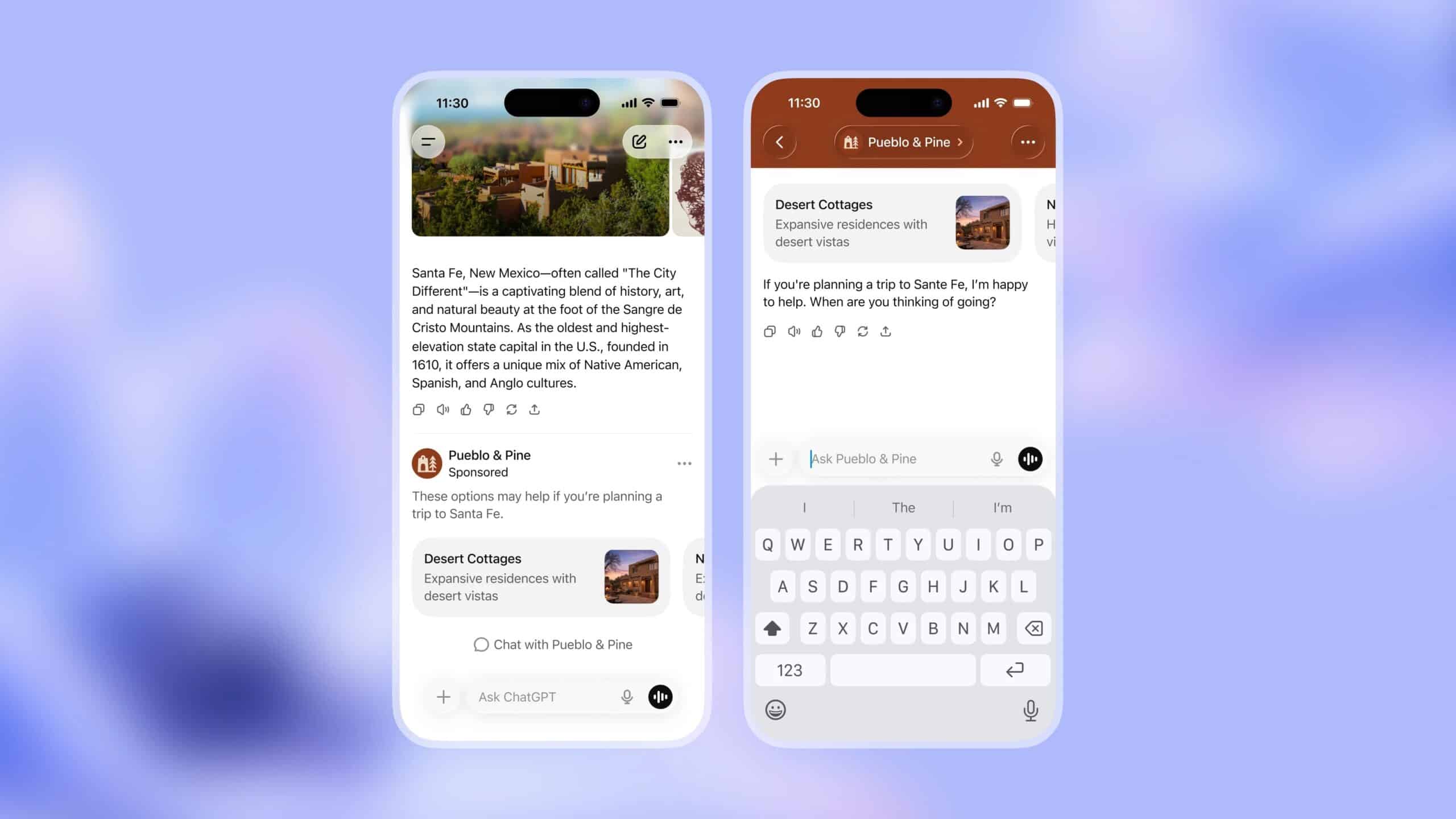
OpenAI says advertisements run through systems that are separate from the model generating the answer. Advertisers cannot pay to shape, rank or alter what ChatGPT says, and an ad appearing below a response doesn’t mean OpenAI endorses that business.
That matters because transparency is central to how people use ChatGPT. Someone might be asking about a holiday, a new software platform or a pair of running shoes. They could also be discussing something highly personal. Blurring the boundary between a useful answer and a paid placement would quickly undermine the experience.
How does ChatGPT ad targeting work?
This is where ChatGPT Ads begin to look meaningfully different from traditional search advertising.
A search engine might receive a query such as:
“Best CRM for small business”
A ChatGPT conversation could contain far more detail:
“We run a 30-person professional services business in Sydney. We need a CRM that integrates with Xero, is simple enough for our team to adopt and won’t require a full-time administrator. We’re replacing spreadsheets and want to be live within two months.”
Both users may be considering CRM software. The second conversation, however, contains the business type, company size, location, current system, required integration, internal capabilities and purchase timeframe. That context can help an advertising system understand not just what someone is researching, but what they’re trying to achieve.
OpenAI says its ads system tries to match ads according to the context and intent of a chat. Advertisers can provide context hints describing relevant topics, situations, customer needs or keywords, but these aren’t exact-match targeting rules and don’t guarantee placement in a particular type of chat. The ad’s headline, copy and landing page can also contribute to the matching process.
So the implication for marketers is that instead of building campaigns around isolated search terms, we’ll need to think more deeply about:
- The problem a customer is trying to solve
- The language they use to explain that problem
- The constraints affecting their decision
- The situations in which our offer is genuinely useful
- The different questions asked at each stage of consideration
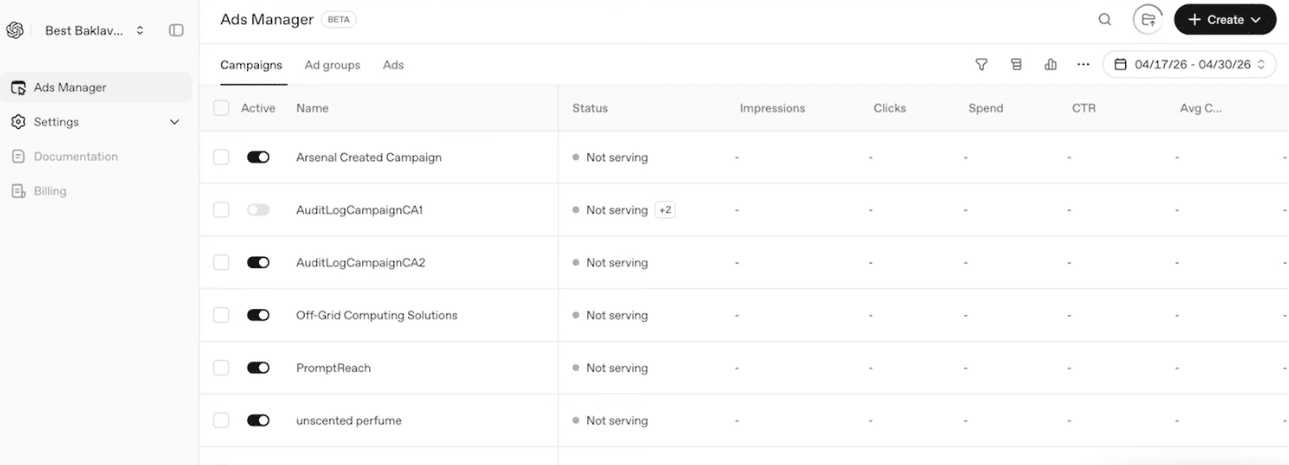
The Ads Dashboard
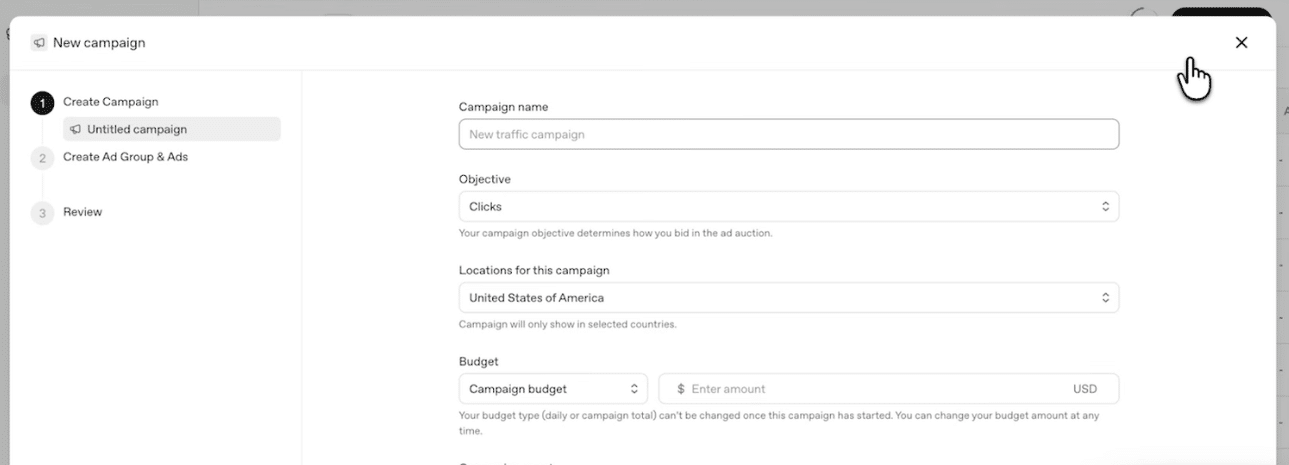
Creating a campaign
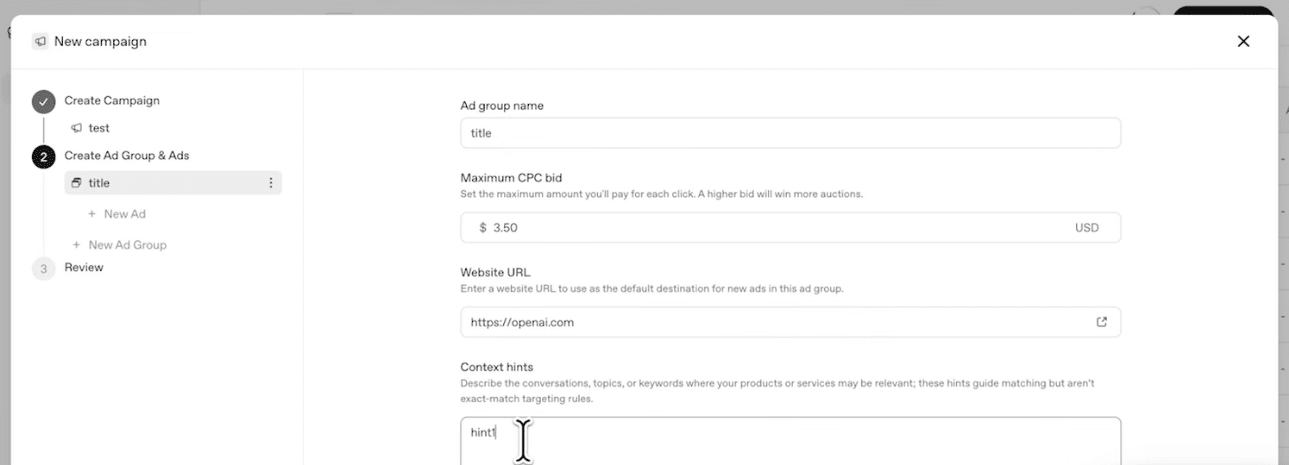
Adding context hints
Context isn’t the only targeting control
OpenAI has also introduced custom audiences created from an advertiser’s own email address or phone number lists.
These audiences can be used to include or exclude known groups from a campaign, or to adjust bids when someone belongs to a higher- or lower-priority audience. They’re designed for larger datasets: OpenAI currently requires at least 25,000 matched users and recommends audiences of 100,000 or more.
For many Australian businesses, particularly smaller organisations or specialised B2B brands, those thresholds will put custom audiences out of reach for now. Contextual matching is more likely to remain the more practical starting point.
How can Australian advertisers buy ChatGPT Ads?
Australian businesses can create and manage campaigns through OpenAI’s self-serve Ads Manager Beta.
The current campaign structure will feel familiar to experienced performance marketers:
- Campaign: Sets the objective, budget, dates and target country.
- Ad group: Organises ads around a specific theme, need or intent area and contains the context hints.
- Ad: Contains the headline, copy, image and landing page shown to the user.
Advertisers can currently choose between two main objectives:
- Views, purchased on a cost-per-thousand-impressions basis
- Clicks, purchased on a cost-per-click basis
OpenAI uses a relevance-weighted, second-price auction to choose between eligible advertisers. This means the largest bid doesn’t automatically win; relevance is also part of the delivery decision.
Ads Manager reporting currently includes impressions, clicks, spend, click-through rate, average cost per click, average cost per thousand impressions and attributed conversions. Conversion tracking can be set up using OpenAI’s pixel or Conversions API, while tracking parameters can be added to landing-page links for use in existing analytics platforms.
That’s a more developed platform than the phrase “advertising pilot” might suggest. Still, it’s a long way from the depth of controls available across mature platforms such as Google and Meta.
What ChatGPT Ads don’t do
1. Ads don’t influence ChatGPT’s answer
Paying for an advertisement doesn’t make ChatGPT recommend your brand organically. The response and sponsored placement are separate, and OpenAI says advertisers can’t change the answer.
2. Context hints are different from traditional keywords
They help describe the conversations in which an offer may be useful, but they don’t operate like exact, phrase or broad-match keywords. Advertisers shouldn’t expect the same level of query-by-query control they’re used to in paid search.
3. An ad impression doesn’t reveal the conversation
Advertisers receive performance information, not a transcript explaining exactly what the person asked before seeing the ad.
4. The platform isn’t open to every category
OpenAI’s initial advertising programme is concentrated around areas such as lifestyle and household goods, local services, travel and experiences, digital products and education. Some regulated categories require individual approval, while political advertising, gambling, tobacco, alcohol and several other sensitive areas are prohibited.
5. It isn’t a finished product
The available objectives, reporting, audience controls and formats will continue to evolve. Any strategy built today needs room to change tomorrow.
Paid visibility and organic AI visibility are separate
ChatGPT Ads don’t replace the work involved in building organic visibility across AI platforms.
A sponsored placement can put your offer beneath an eligible conversation. It can’t buy a mention within ChatGPT’s answer.
That means marketers should treat paid ChatGPT campaigns and broader AI discovery as separate but complementary workstreams.
Paid activity can create immediate, measurable exposure. Organic activity requires brands to strengthen the information available about their expertise, products and reputation across their own website and the wider web.
The relationship is similar to paid search and search engine optimisation: related customer journeys, different mechanisms.
What should marketers do now?
There’s no need to redirect the annual media budget towards ChatGPT by next Monday. But there IS a strong case for understanding the platform now.
Start by identifying where AI search already plays a role in your customer journey. Review the questions customers ask before contacting you. Look at the details sales teams need to qualify an opportunity. Examine where customers struggle to compare your offer with the alternatives.
That work will help with more than ChatGPT Ads. It can improve your website, content, landing pages, sales material, paid search and overall positioning.
Then assess whether a controlled ChatGPT Ads pilot could generate a useful commercial signal.
Final thoughts
ChatGPT Ads have arrived in Australia, but it’s still early.
The platform already offers self-serve campaign management, contextual matching, CPC and CPM buying, conversion measurement, custom audiences and product feeds. At the same time, it remains a beta product still.
The opportunity isn’t to be first at any cost. But it’s a good idea to start learning before the market becomes crowded. Brands that understand their customers’ real questions, and can answer those questions with a relevant offer, will be in the strongest position to benefit.
Preparing for ChatGPT Ads starts long before you launch a campaign. Our team can help you build the foundations that will set you up for success as ChatGPT Ads continue to evolve in Australia. If you'd like to explore what's possible for your business, we'd love to chat.
About the Author

Ash is Rocket's in-house Marketing Coordinator and the Producer of the Smarter Marketer Podcast. With a passion for marketing and sharp analytical skills, she excels at uncovering the hidden stories behind what drives marketing success.
Ash has worked with B2B SaaS companies in the FinTech and EdTech industries in Australia and India. She holds a Master of International Business degree from the University of Melbourne.
When not busy marketing Rocket, you'll likely find her brewing a delectable cup of chai.
Stay Ahead in Digital Marketing
Join 20K+ Marketers Who Get the Inside Scoop
Other Articles you might be interested in…


The Australian
Digital Marketing Strategy Guide 2026
Everything an in-house marketer needs to craft a winning digital marketing strategy.