Mid-Year Google Ads Audit: What's Working, What's Not and Where to Focus Next in 2026


If you're running Google Ads, now is the perfect time to pause and take stock.
For many Australian businesses, 2026 has brought a new set of challenges. Consumers are more cautious with their spending and marketing budgets are under greater scrutiny. AI is now built into almost every part of the platform, while the way people search is changing as tools like AI Overviews, ChatGPT and Gemini become part of the buying journey.
So is your Google Ads budget working as hard as it could be? Answering these questions can help you know.
As you work through this guide, don't rush to the end. Pause at each section and think honestly about the questions being asked. Whether you're reviewing your campaigns yourself or discussing them with your agency, they'll help you identify where your biggest opportunities might be.
At the end of this article, you'll find a practical Google Ads audit checklist that brings everything together. Use it to review your account, identify strengths, uncover gaps and decide where to focus for the rest of the year.
1. Is your Google Ads strategy still aligned with your business goals?
It's surprisingly common for campaigns to keep running long after the business has changed. Maybe you've launched a new service. Maybe you're focusing on higher-value customers. Or perhaps the goal has shifted from growth to profitability.
If your priorities have changed, your Google Ads strategy should change too.
Questions to ask
- What are our biggest business priorities for the rest of the year?
- Are our Google Ads campaigns supporting those priorities?
- If we were building this account from scratch today, would it look the same?
Read how Clifton Lifestyle generated 240x ROI from a strategic paid media overhaul.
2. Are you attracting the right customers?
More clicks don't automatically mean better results. One of the biggest opportunities we see is businesses optimising for traffic when they should be optimising for customer quality.
The goal isn't to generate more enquiries but to generate more of the right enquiries.
Questions to ask
- Which campaigns are bringing in our best customers?
- Are we attracting enquiries that are unlikely to convert?
- Where are we spending money without seeing meaningful business outcomes?
Sometimes improving ROAS has nothing to do with increasing your budget. It's simply about investing more in what's already working.
This is how we helped Tall Emu exceed SaaS lead targets by 86% within 3 months.
3. Has AI improved your campaigns?
There's no doubt AI is transforming Google Ads. From bidding strategies to campaign creation, Google's AI is making more decisions than ever before.
Questions to ask
- How is AI being used in our campaigns today?
- What decisions are still being made by our team or agency?
- Are we seeing measurable improvements from Google's AI-powered features?
You don't need to understand every setting inside Google Ads. You just need confidence that the technology is supporting your strategy instead of replacing it.
4. Could your website be limiting your results?
Google Ads can generate traffic. Your website turns that traffic into customers.
If people are clicking your ads but not converting, the issue may not be your campaigns at all. Landing pages, messaging, page speed and user experience all influence whether someone takes the next step.
Questions to ask
- Does our website clearly explain why someone should choose us?
- Is it easy for visitors to enquire or buy?
- Have we reviewed our key landing pages recently?
Small improvements to your website often have a bigger impact than increasing your advertising budget. And if you’re curious about how to turn your website into a conversion engine, this article might help: How to Turn Traffic Into Conversions.
5. Are you measuring success accurately?
One of the biggest changes in Google Ads over the past few years has happened behind the scenes. As AI plays a bigger role in campaign optimisation, accurate data has become more important than ever.
If Google doesn't understand which leads become customers, it can't optimise effectively. That doesn't mean you need to know how conversion tracking works. It does mean you should be confident that your marketing decisions are based on reliable data.
Questions to ask
- Can we clearly see which campaigns generate revenue?
- Are we feeding Google Ads high-quality conversion data, or just counting every form submission equally?
- Are we measuring the outcomes that matter most to the business?
- Is there anything we're still guessing?
What's worth exploring in Google Ads this year?
Not every new feature deserves your attention.
These are the ones we'd be discussing with clients in 2026.
- AI-powered campaign improvements: Google continues to expand the role of AI in campaign management. The opportunity is to automate the right things (not everything).
- Performance Max: Now a much more mature campaign type, particularly for businesses with strong creative assets and reliable conversion data. While it can deliver excellent results, it performs best when Google's AI has clear goals and quality data to optimise towards.
- Demand Gen campaigns: Worth considering if you're looking to build awareness before customers actively start searching.
- First-party customer data: Features like Customer Match and Enhanced Conversions are becoming increasingly valuable as privacy expectations evolve.
- Creative refreshes: If your ads haven't changed all year, refreshing your messaging could be one of the simplest improvements you make.
To go deeper into how these 2026 Google Ads updates might impact your campaigns, read this article straight from the desks of our paid search experts: Google Ads Updates & Trends 2026
Your 2026 Google Ads Audit Checklist
Use this checklist to identify where your account is performing well and where there may be opportunities to improve.
| Audit Question |
🟢
Yes
|
🟡
Not Sure
|
🔴
No
|
|---|---|---|---|
| Our Google Ads strategy reflects our current business goals. | |||
| We know which campaigns generate our highest-value customers. | |||
| We're confident our budget is invested in the campaigns delivering the best return. | |||
| We regularly review the quality of our enquiries—not just the number of clicks. | |||
| We understand how AI is being used across our campaigns. | |||
| We're seeing measurable improvements from Google's AI-powered features. | |||
| Our website supports the goals of our Google Ads campaigns. | |||
| Our landing pages clearly match the message in our ads. | |||
| It's easy for visitors to take the next step once they reach our website. | |||
| We can clearly measure which campaigns generate revenue or quality leads. | |||
| We're confident the data we're using to make marketing decisions is accurate. | |||
| We've reviewed the latest Google Ads features and know which are worth exploring for our business. | |||
| We have a clear plan for improving our Google Ads performance in the second half of 2026. |
What your results mean
Mostly green: Your account is in a strong position. Focus on continuous improvement, keep testing new ideas and review your performance regularly.
A mix of green and amber: This is where many businesses find themselves. You likely have a few untapped opportunities that could significantly improve performance without increasing your ad spend.
Three or more reds: Your account is probably due for a more comprehensive review. The encouraging part is that many of the biggest gains come from improving strategy, measurement and customer experience, not simply spending more.
If you'd like an experienced second set of eyes on your campaigns, our award-winning Paid Search specialists can help you identify what's working, what's holding you back and where your biggest opportunities lie for the rest of the year. Get in touch.
About the Author

Ash is Rocket's in-house Marketing Coordinator and the Producer of the Smarter Marketer Podcast. With a passion for marketing and sharp analytical skills, she excels at uncovering the hidden stories behind what drives marketing success.
Ash has worked with B2B SaaS companies in the FinTech and EdTech industries in Australia and India. She holds a Master of International Business degree from the University of Melbourne.
When not busy marketing Rocket, you'll likely find her brewing a delectable cup of chai.
Stay Ahead in Digital Marketing
Join 20K+ Marketers Who Get the Inside Scoop
Other Articles you might be interested in…
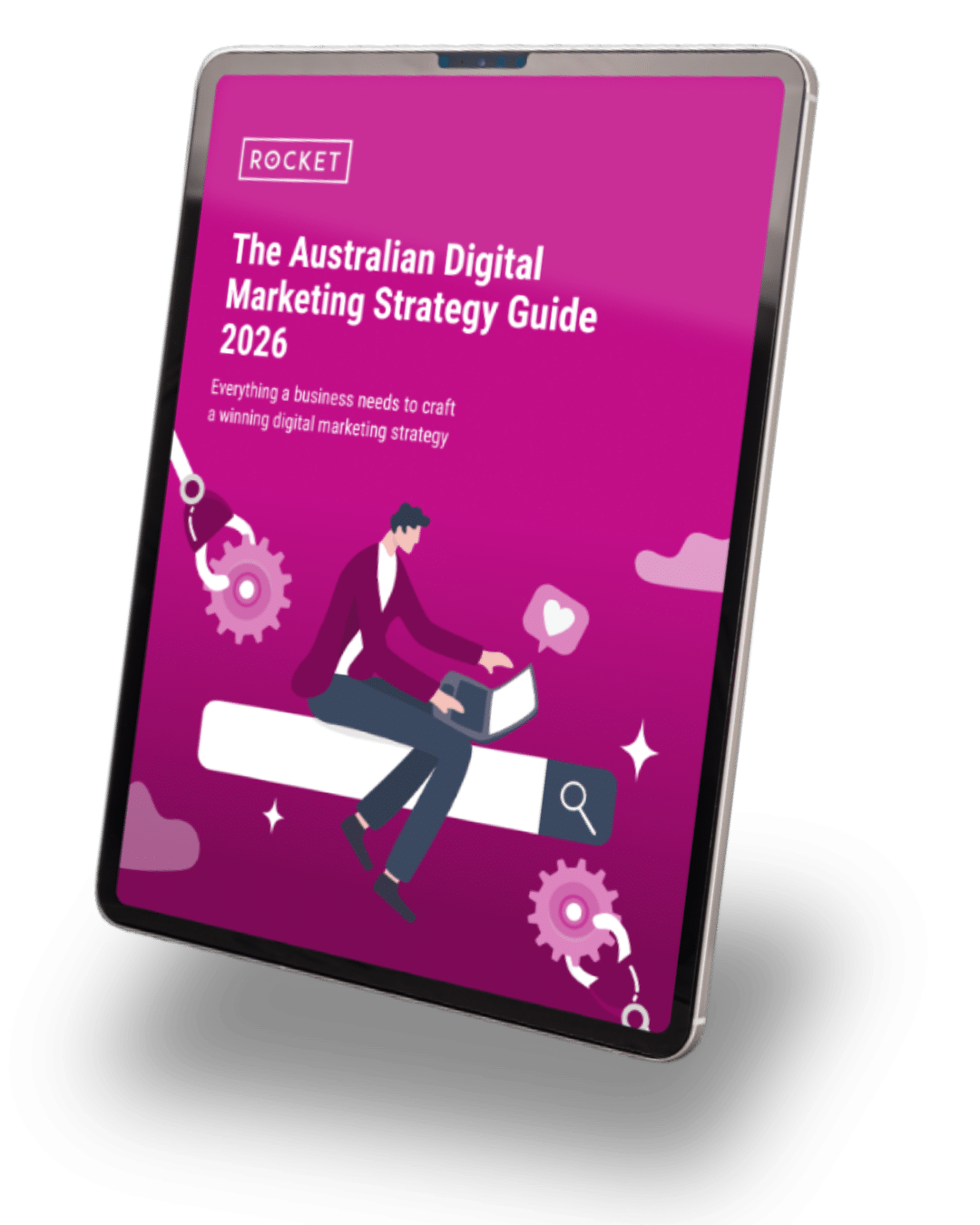
The Australian
Digital Marketing Strategy Guide 2026
Everything an in-house marketer needs to craft a winning digital marketing strategy.